




Proper attic insulation is one of the most important upgrades for Chicago-area and Northwest Indiana homes. With cold winters and hot summers in our region, upgrading attic insulation ensures year-round comfort and lower energy bills. At Qute Insulation, we specialize in all types of attic insulation for homeowners across Cook, DuPage, Lake, and surrounding counties. Whether you have an older home in Homewood, a bungalow in Joliet, or a new build in Gary, we can recommend the best insulation solution to reduce drafts, noise, and high utility costs.
A well-insulated attic can cut heating and cooling costs by up to 30%. Your HVAC system doesn’t have to run as long or as often, saving on energy bills.
Say goodbye to hot upstairs in summer and chilly floors in winter. Consistent insulation R-values keep your home’s temperature even from floor to ceiling.
Insulation acts as a sound barrier. Traffic, loud neighbors, or barking dogs are muffled, making your home quieter.
In the Chicago winter, heat escaping through the attic causes ice dams on the roof. Good insulation keeps heat inside, reducing ice dams and roof damage.
Proper insulation (plus ventilation) helps prevent moisture buildup in the attic, which reduces the risk of mold growth and wood rot.
Energy-efficient homes attract more buyers. Upgrading attic insulation boosts resale value and helps your home stand out in Cook, DuPage, and Lake County.
There are several insulation options for attics. We’ll help you choose based on your goals:
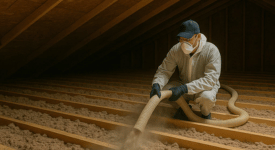
Glass fiber insulation that is blown into attics and fills gaps around pipes and vents. Pros: Good R-value per inch (~R-2.7/” to R-3.0/”), inexpensive, easy to install on existing attics.
Made from recycled paper treated for fire resistance, cellulose is dense and blocks sound well. Pros: Excellent at filling irregular spaces, eco-friendly material, good airflow resistance.
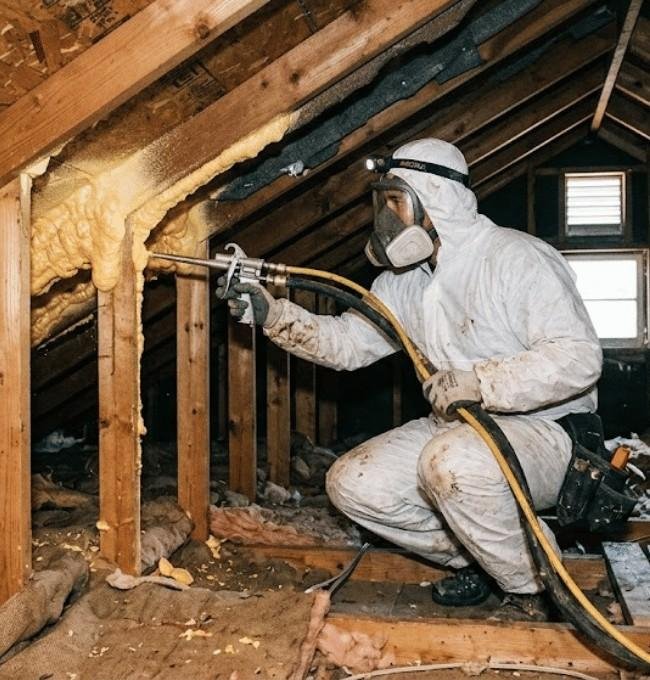
Foam that expands to fill cavities, providing both insulation and air sealing. Pros: High R-value (~R-3.5/”), seals air leaks, great for sealing rim joists or hard-to-reach spaces.
A denser foam with higher R-value (~R-6/”) per inch, suitable for very tight spaces and adds structural rigidity. Pros: Highest R-value, acts as a moisture barrier.
Sheets of polystyrene or polyiso installed on attic walls or roof decks. Pros: Very high R-value per inch, can be used on attic kneewalls or roof lines, moisture-resistant.
Glass fiber insulation that is blown into attics and fills gaps around pipes and vents. Pros: Good R-value per inch (~R-2.7/” to R-3.0/”), inexpensive, easy to install on existing attics.
Made from recycled paper treated for fire resistance, cellulose is dense and blocks sound well. Pros: Excellent at filling irregular spaces, eco-friendly material, good airflow resistance.
Foam that expands to fill cavities, providing both insulation and air sealing. Pros: High R-value (~R-3.5/”), seals air leaks, great for sealing rim joists or hard-to-reach spaces.
A denser foam with higher R-value (~R-6/”) per inch, suitable for very tight spaces and adds structural rigidity. Pros: Highest R-value, acts as a moisture barrier.
Sheets of polystyrene or polyiso installed on attic walls or roof decks. Pros: Very high R-value per inch, can be used on attic kneewalls or roof lines, moisture-resistant.
We’ll perform a blower door test (see our Blower Door Testing) to measure air leaks and determine the current attic R-value. Then we’ll recommend how much insulation to add to meet local climate needs.

We start by inspecting your attic space. We check for existing insulation (type and depth), look for signs of moisture, mold, or pest damage, and identify any air leaks around vents, chimneys, or attic hatches.
If the current insulation is moldy or contaminated by rodents, we safely remove and dispose of it. We follow up by cleaning the attic floor to prepare for new insulation. (Check our Insulation Removal service for details.)
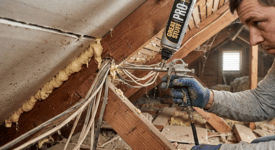
Before adding insulation, we seal attic air leaks. We apply expanding foam or caulk around top plates, ceiling penetrations, and recessed lights. Proper air sealing ensures conditioned air stays in the house and moisture stays out of the attic. We also seal attic hatches with gaskets or foam.
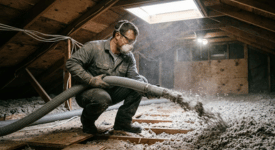
We install the best insulation for your attic—blown-in (fiberglass or cellulose), spray foam, or batt—ensuring full coverage with no gaps. We also insulate knee walls and storage areas to prevent heat loss and maximize efficiency.
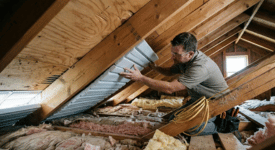
Proper ventilation is critical. We inspect soffit vents and ridge vents, adding baffles to keep insulation from blocking airflow if necessary. In some cases, we upgrade vents to maintain air circulation.
We vacuum the work area and ensure no debris or dust remains. Finally, we conduct a final inspection or blower door test to confirm the installation’s effectiveness. You’ll get an energy report showing your home’s improved tightness and expected savings.

We handle everything from start to finish. Our technicians are EPA Lead-Safe certified and fully insured. All insulation is installed to manufacturer specs and local code, with dust control measures (such as vacuuming and masking vents) to protect your home.
Attic insulation projects typically range from $1,200 to $3,500 in our area, depending on attic size, insulation type, and current R-value. Loose-fill blown insulation is usually most cost-effective, while spray foam is higher due to material cost. We provide a detailed quote upfront.
Most Chicago/NW Indiana homes see their heating and cooling bills drop 15–30% after a proper attic retrofit. For example, if your annual energy bill is $2,400, you might save $300–$700 per year by upgrading insulation. Over 5 years, that’s $1,500–$3,500 back in your pocket.
Given these savings, attic insulation often pays for itself in 2–4 years. Plus, you get immediate comfort improvements. In addition, local Nicor Gas and NIPSCO rebate programs may cover a large portion of the cost (as detailed on our Energy Rebates page). Stacking rebates and federal tax credits can make the project even cheaper.
We also offer financing options, making it easy to upgrade now and pay over time as you save.
Attic insulation projects typically range from $1,200 to $3,500 in our area, depending on attic size, insulation type, and current R-value. Loose-fill blown insulation is usually most cost-effective, while spray foam is higher due to material cost. We provide a detailed quote upfront.
Most Chicago/NW Indiana homes see their heating and cooling bills drop 15–30% after a proper attic retrofit. For example, if your annual energy bill is $2,400, you might save $300–$700 per year by upgrading insulation. Over 5 years, that’s $1,500–$3,500 back in your pocket.
Given these savings, attic insulation often pays for itself in 2–4 years. Plus, you get immediate comfort improvements. In addition, local Nicor Gas and NIPSCO rebate programs may cover a large portion of the cost (as detailed on our Energy Rebates page). Stacking rebates and federal tax credits can make the project even cheaper.
We also offer financing options, making it easy to upgrade now and pay over time as you save.
We’ve insulated thousands of homes in Cook, DuPage, Lake, Will, and Porter Counties. We know local building styles (bungalows, Chicago bricks, Mobile homes, etc.) and tailor solutions accordingly.
Our crew includes BPI and Spray Foam certifications. They receive ongoing training on best practices, ensuring top quality work.
We use trusted brands (Johns Manville, Owens Corning, Lapolla, etc.) that meet or exceed energy codes.
Qute Insulation has multiple Angi Super Service Awards and an A+ rating with the BBB. We have hundreds of 5-star reviews from happy customers across the region.
Your satisfaction is guaranteed. We stand behind our work with a formal warranty on labor and materials.
Many companies offer insulation, but Qute stands out in Chicagoland and NW Indiana:
Check your attic R-value: if your insulation depth is under 12–15 inches (fiberglass) or under R-38, you likely need more. Other signs: uneven heating/cooling in rooms, ice dams on your roof, or unusually high energy bills. A quick energy audit (blower door test) can diagnose attic losses.
We can safely handle that. If there’s suspect material, we’ll follow EPA lead-safe practices: we’ll either carefully seal it under the new insulation or coordinate removal if needed. Our team is trained in these special situations.
A typical 1,000–1,500 sq ft attic can be insulated in 4–8 hours. Spray foam jobs might take a bit longer due to curing time. We aim to minimize disruption: our installers wear shoe covers and use drop cloths to keep your home clean.
Not at all. However, for maximum comfort, you may want to keep windows open briefly after installation to air out dust or odors. Our team will do a thorough cleanup, so you can stay at home during the job.
We provide manufacturer warranties on insulation materials and a 3-5 year workmanship warranty. Qute Insulation is a licensed contractor in Illinois and Indiana. Our staff have relevant certifications (Spray Foam, BPI, etc.), ensuring professional results.
Start improving your home’s comfort and efficiency today!
Call 1-708-808-7870 or click Request a Free Quote to schedule your no-obligation inspection.
Our friendly team is ready to help you save money from day one.