
Attic insulation services are the professional installation, upgrade, repair, removal, or replacement of attic insulation to reach R-49, the IECC Climate Zone 5 minimum standard. Qute Insulation provides attic insulation services near me searches return most often across Chicago and Northwest Indiana, including Gary, Crown Point, Elgin, and Joliet.

Attic insulation services are the professional installation, upgrade, repair, removal, or replacement of attic insulation material to reach a target R-value. IECC Climate Zone 5, which covers the Chicago metro area, requires a minimum attic R-value of R-49. Qute Insulation provides professional attic insulation services for homes and commercial buildings across the Chicago metro area and NW Indiana communities, including Gary, Crown Point, and Joliet.
Homes in Park Forest, Flossmoor, and Gary built before modern energy codes commonly have attic insulation rated at only R-19 to R-30, roughly half the current R-49 recommendation. Heat rising through this gap is the largest single source of winter heat loss in a typical home. Upgrading attic insulation to R-49 is the single highest-impact energy improvement available to most Chicago-area homeowners.
The U.S. Department of Energy says homes in our climate zone (Zone 5 – which covers all of Chicagoland and Northwest Indiana) need attic insulation rated at R-49 to R-60. That’s roughly 14 to 18 inches of blown-in insulation.
Here’s the problem: most homes in our area built before 1990 have insulation rated R-11 or R-22 in the attic. That’s less than half of what’s needed. The gap between what you have and what you need is costing you money every single day.
Properly insulated attics solve four distinct problems for Chicago-area homes.
Heat rises and escapes through an under-insulated attic faster than through any other part of a home's envelope. Bringing attic insulation up to the R-49 IECC Climate Zone 5 standard stops this loss at its single largest source.
ENERGY STAR data shows homeowners save an average of 15 percent on heating and cooling costs with proper attic insulation. Nicor Gas and ComEd rebates apply, including for r-49 attic insulation Elgin IL upgrades
Escaping attic heat melts roof snow, which refreezes at the colder eaves and forms ice dams that force water under shingles. Proper attic insulation and air sealing keep the entire roof deck at a consistent temperature, preventing this cycle.
Properly insulated attics eliminate hot and cold spots between floors and reduce HVAC cycling. Energy-efficient insulation upgrades are documented to increase home resale value, making this both a comfort improvement and a long-term investment for Chicagoland homeowners.
Posted on Google
 Terry Browne
Trustindex verifies that the original source of the review is Google.
I Received A Great Quote, & Derrick Is Very Professional,He Explained Everything In Detail, He Gets An A +++ 🙏Posted on Google Rod SpencerExcellent work and very professional. Blew installation into my split-level inside wall. Performed the job from the top level of the inside wall and the bottom. I highly recommend this company. 5 Stars *****Posted on Google
 Billy BurseGreat folks and great workPosted on Google
 Ellie CastilloI processed my request online and Derrick contacted me within minutes to schedule an in person quote he matched price and schedule the same week my work. Very responsible, professional and everything was done within hours they left my house cleaned and very happy with their job !!! 100% recommended!!Posted on Google
 Mark MaysAttic installation was done well and price was reasonable.Posted on Google
 Christine ZylstraAfter removing my attic insulation completely, cleaning and disinfecting, the team of professionals installed the new insulation in record time. They were very professional and thorough. I can feel the difference in one day. They were polite, helpful and cleaned up completely when the job was finished. I highly recommend this company.
Safe removal of old, damaged, or contaminated insulation before new material is installed. A top choice for attic cleaning and insulation services near me and attic insulation removal services near me searches.
Seamless blown fiberglass or cellulose coverage that fills every gap and irregular space on the attic floor, the fastest and most common upgrade method for existing homes.
Safe removal of old, damaged, or contaminated insulation before new material is installed, required when existing insulation is wet, moldy, or pest-contaminated.
Full removal and replacement of outdated or insufficient attic insulation, restoring the attic to full R-49 performance in one complete project.
Adds additional insulation layers directly over existing undamaged material to bring older Chicagoland attics from R-19 to R-30 up to the current R-49 recommendation.
Targeted repair of damaged, compressed, or displaced insulation in specific attic areas, such as around access hatches, vents, or storage walkways.
Combines traditional R-49 insulation with a reflective radiant barrier installed under the roof deck for additional summer heat control in NW Indiana attics.
Complete attic insulation solutions tailored to single-family homes and townhomes, scoped to each home's specific attic size, joist depth, and access conditions.
Budget-friendly insulation options and financing solutions for Chicago and NW Indiana homeowners, including phased upgrade plans that spread the cost of reaching R-49.
Every Qute Insulation attic project follows a clear five-step process.
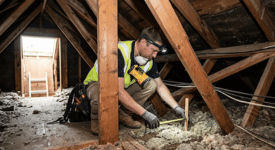
We inspect current insulation type, depth, and condition, measuring existing R-value and comparing it against the R-49 IECC Climate Zone 5 target to determine the required upgrade amount.
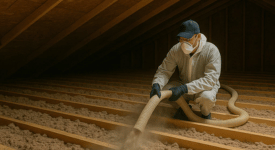
We recommend blown fiberglass, blown cellulose, spray foam, or a radiant barrier combination based on attic condition, budget, and whether removal of existing material is required first.
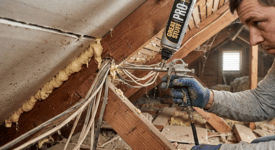
We seal all attic bypasses, top plates, and penetrations before insulating, since air sealing first is required for insulation to perform at its rated R-value.

We install the recommended material to the calculated depth needed to reach R-49, maintaining required clearance around recessed lighting, exhaust fans, and chimneys.
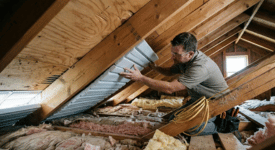
We verify installed depth and coverage meet the R-49 target across the entire attic floor, complete cleanup, and document the final R-value achieved.
Blown-in attic insulation upgrades cost $1.50 to $3.50 per square foot installed in the Chicago metro area, with a full attic project running $1,500 to $4,000 depending on attic size and target R-value. Full removal and replacement projects cost $3,000 to $7,000. Radiant barrier addition costs an additional $1.00 to $1.50 per square foot. The IRA Section 25C tax credit covers 30 percent of qualifying costs up to $1,200 annually, and Nicor Gas and ComEd offer additional rebates. Contact Qute Insulation for a free written estimate.


Blown-in insulation fills irregular spaces and gaps, while batt insulation leaves gaps around obstructions unless custom-cut. Blown-in is faster to install and typically less expensive per R-value point achieved for existing attic upgrades. For most Chicagoland attic upgrades, blown-in insulation reaches the R-49 target faster and with fewer gaps than batt insulation, making it the more common choice for existing homes.

An upgrade, adding new insulation over existing undamaged material, is appropriate when current insulation is dry, clean, and structurally sound. Full removal and replacement is required when insulation is wet, moldy, pest-contaminated, or compressed beyond usefulness. If your attic insulation is simply too thin but otherwise clean and dry, an upgrade reaching R-49 costs less than full removal and replacement for Flossmoor and Homewood homeowners.
Qute Insulation installers are trained on IECC Climate Zone 5 R-49 code requirements and ENERGY STAR insulation guidelines, with experience across all Chicago-area attic types.
Qute Insulation uses commercial-grade blown-in machines and professional fiberglass, cellulose, and spray foam materials rated for accurate, consistent R-49 coverage across every attic.
Written quotes specify material type, target R-value, square footage, and total cost before any work begins. Free estimates available across all service areas.
Our team knows which Gary, Park Forest, and Crown Point home types commonly have outdated R-19 to R-30 insulation and the exact upgrade path to reach R-49 code.
Qute Insulation serves residential and commercial attic insulation projects across the region, handling new installation, upgrades, removal and replacement, and radiant barrier addition for every property type. If you are searching for attic insulation near me or attic insulation service near me, our code-trained team covers the full Chicagoland and NW Indiana service area.
Flossmoor, IL | Homewood, IL | Park Forest, IL | Monee, IL | Joliet, IL | Chicago, IL | Naperville, IL | Aurora, IL | Elgin, IL | Schaumburg, IL | Orland Park, IL | Tinley Park, IL | Oak Lawn, IL | Berwyn, IL | Cicero, IL
Gary, IN | Crown Point, IN | Hammond, IN | East Chicago, IN | Whiting, IN | Griffith, IN | Highland, IN | Munster, IN | Dyer, IN | Schererville, IN | Merrillville, IN | Hobart, IN | Portage, IN | Valparaiso, IN | Lake Station, IN
Attic insulation installation requires full PPE including a respirator, gloves, and eye protection for blown-in and batt work. Installers maintain required clearance around recessed lighting, exhaust fans, and chimneys to prevent fire hazard. Attic access is confined-space work performed with proper fall protection on older joist structures. All installation meets IECC Climate Zone 5 code requirements. Licensed and insured.


Properly installed blown-in or batt attic insulation lasts 20 to 30 years with no maintenance required under normal conditions. Annual inspection is recommended to check for compression near storage areas, displacement from pest activity, and adequate depth at the eaves where coverage is most often thin.
Every winter with under-insulated attic space wastes energy dollars and increases ice dam risk. Qute Insulation brings code-trained installers, transparent R-value-based pricing, and professional blown-in equipment to Gary, Crown Point, Flossmoor, Homewood, Park Forest, Monee, and Joliet. Call [1-708-808-7870] today for a free attic insulation assessment and find out how close your home is to the R-49 standard.
Attic insulation services are the professional installation, upgrade, repair, or replacement of attic insulation to reach the R-49 IECC Climate Zone 5 standard. Most older Chicago-area attics have only R-19 to R-30 insulation, causing significant winter heat loss and higher energy bills.
Blown-in fiberglass or cellulose insulation is the best choice for most Chicago-area attics because it fills irregular gaps completely, reaching the R-49 target with fewer cold spots than batt insulation. Batt insulation remains a reasonable lower-cost option for simple, obstruction-free attic shapes.
Blown-in attic insulation upgrades cost $1.50 to $3.50 per square foot in the Chicago metro area, with a typical full attic project running $1,500 to $4,000. Full removal and replacement projects cost $3,000 to $7,000 depending on attic size and condition.
Look for a code-trained contractor who measures your current R-value before quoting, rather than a flat per-bag estimate. Qute Insulation is a strong match for attic insulation near me and attic insulation service near me searches across Chicagoland and NW Indiana.
Elgin, IL falls within IECC Climate Zone 5, which requires a minimum attic R-value of R-49. Most Elgin homes built before 1990 have only R-19 to R-30, so reaching r-49 attic insulation Elgin IL homeowners need typically requires 14 to 18 inches of blown-in fiberglass or cellulose.
Blown fiberglass or cellulose is generally considered the best blown in attic insulation services option for older Chicago homes because it fills irregular joist bays completely, reaching the R-49 target with fewer gaps than batt insulation.
A standard blown-in attic insulation upgrade takes 3 to 6 hours for most Chicago-area homes, depending on attic size and accessibility. Full removal and replacement projects, including air sealing and cleanup, typically take a full day to complete in Crown Point and Joliet homes.
Yes, proper attic insulation combined with air sealing keeps the entire roof deck at a consistent cold temperature, preventing the heat escape that melts snow and causes ice dams. Homes with only R-19 to R-30 insulation in Flossmoor and Park Forest are at the highest ice dam risk.
Old insulation only needs removal if it is wet, moldy, pest-contaminated, or severely compressed. Dry, clean, structurally sound insulation can simply be topped up with additional material to reach the R-49 target, saving cost for homeowners in Monee and Joliet.
Yes. Qute Insulation provides attic cleaning and insulation services near me for wet, moldy, or pest-contaminated attics, including full attic insulation removal services near me before new material is installed.