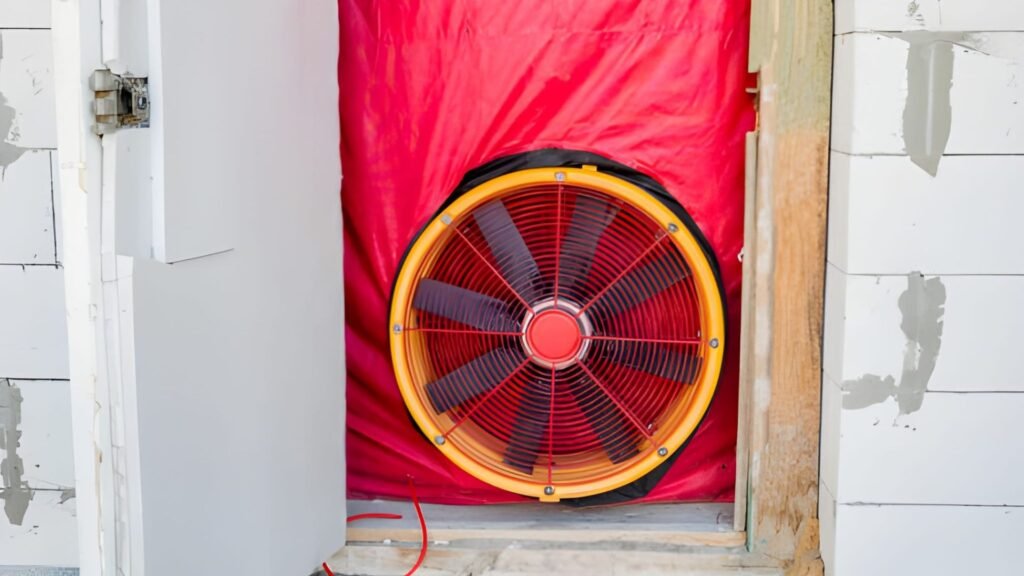
A blower door test is used to determine exactly how much air is leaking into or out of your home through gaps, cracks, and unsealed penetrations in the building envelope. Qute Insulation provides professional blower door testing in Northwest Indiana and Chicagoland for homeowners, builders, and property managers who need accurate, code-compliant airtightness data instead of a guess.
So what is a blower door test, exactly? It’s a diagnostic procedure that uses a calibrated fan to pressurize or depressurize your home, revealing precisely how airtight or leaky your building envelope really is. A house blower door test isn’t just for new construction: it’s equally valuable for older Chicagoland homes trying to track down where their heating and cooling dollars are escaping.
Your blower door test results are reported as CFM50 (cubic feet of air leakage per minute at 50 pascals) and ACH50 (air changes per hour). Illinois’s 2021 IECC, effective January 1, 2024, requires blower door testing for new residential construction with a limit of 3 ACH50 for Climate Zone 5. Indiana’s statewide residential energy code allows up to 7 ACH50 with a field verification option, though many Indiana builders and lenders still require verified blower door test results. Qute Insulation provides official results reports accepted for permit submission and certificate of occupancy by local building departments across Chicagoland and NW Indiana.
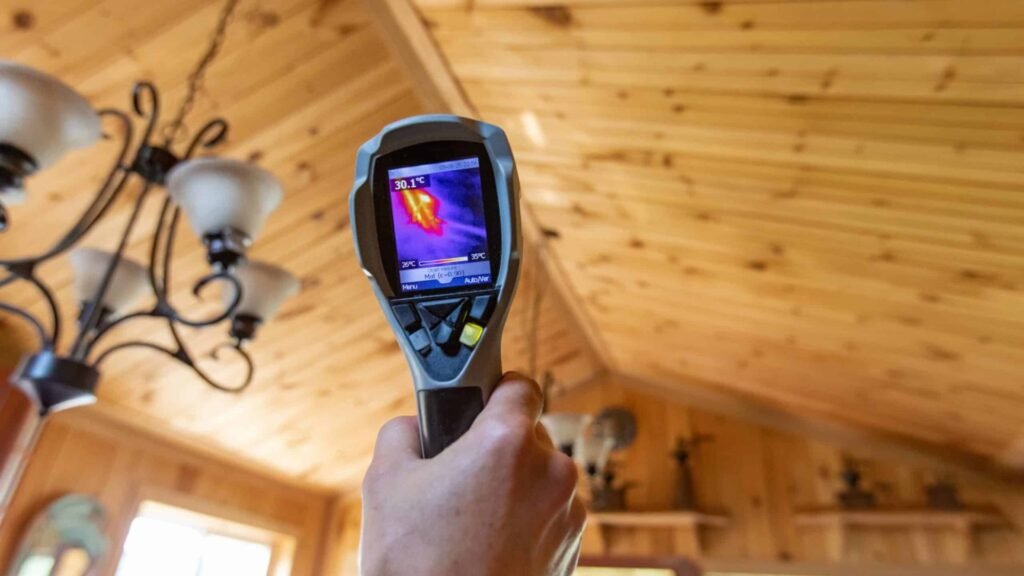
A blower door test, especially when combined with thermal imaging or a smoke pencil, pinpoints exact air leak locations, rim joists, attic bypasses, electrical penetrations, and window frames, eliminating guesswork from air sealing investment in Chicagoland homes.
Pre-insulation blower door testing establishes a baseline ACH 50 post-work testing measures the verified improvement. This before-and-after data proves the value of air sealing investment and ensures Chicagoland homeowners meet IECC Climate Zone 5 airtightness targets.
Illinois's 2021 IECC requires ≤3 ACH50 blower door testing for new residential construction in Climate Zone 5, while Indiana's residential energy code accepts up to 7 ACH50 with a testing or field verification path. Qute Insulation provides official ACH 50 results reports accepted for permit submission and certificate of occupancy by local building departments across Chicagoland and NW Indiana.
Blower door test data turns air infiltration into measurable numbers, and ENERGY STAR estimates that sealing air leaks and adding insulation saves homeowners an average of 15% on heating and cooling costs. Targeted air sealing identified by the test directly reduces ComEd and Nicor Gas bills for Chicagoland homeowners.
Posted on Google
 Terry Browne
Trustindex verifies that the original source of the review is Google.
I Received A Great Quote, & Derrick Is Very Professional,He Explained Everything In Detail, He Gets An A +++ 🙏Posted on Google Rod SpencerExcellent work and very professional. Blew installation into my split-level inside wall. Performed the job from the top level of the inside wall and the bottom. I highly recommend this company. 5 Stars *****Posted on Google
 Billy BurseGreat folks and great workPosted on Google
 Ellie CastilloI processed my request online and Derrick contacted me within minutes to schedule an in person quote he matched price and schedule the same week my work. Very responsible, professional and everything was done within hours they left my house cleaned and very happy with their job !!! 100% recommended!!Posted on Google
 Mark MaysAttic installation was done well and price was reasonable.Posted on Google
 Christine ZylstraAfter removing my attic insulation completely, cleaning and disinfecting, the team of professionals installed the new insulation in record time. They were very professional and thorough. I can feel the difference in one day. They were polite, helpful and cleaned up completely when the job was finished. I highly recommend this company.
A comprehensive residential air leakage test using Minneapolis Blower Door equipment, measuring whole-house airtightness in ACH 50 and CFM 50 for existing homes and new construction across Chicagoland.
Required pressure testing for new residential construction i in Illinois (2021 IECC) and Indiana (state residential energy code), delivering official ACH 50 results for building permit and certificate of occupancy submission.
A combined blower door and FLIR thermal imaging inspection that visually pinpoints every air leak and insulation gap revealed by the pressure differential, the most comprehensive air leakage diagnostic available.
A pressurization test pushes air into the home rather than pulling it out, useful for locating specific infiltration points and verifying the effectiveness of individual air sealing repairs in Chicagoland homes.
Integrated into full home energy audit workflows as the foundational diagnostic step, quantifying air infiltration losses before recommending insulation, air sealing, or HVAC improvements across NW Indiana and Chicagoland.
Uses a Duct Blaster alongside the blower door to measure air leakage from ductwork and HVAC connections, identifying duct leakage losses in CFM25 that reduce system efficiency and increase heating and cooling costs in NW Indiana homes.
Large-scale air leakage testing for commercial buildings, warehouses, and multi-unit properties across Chicagoland, using professional Minneapolis Blower Door equipment calibrated for large building envelope measurement.
Baseline and follow-up ACH 50 pressure tests measuring the verified improvement delivered by air sealing and insulation work, providing documented proof of energy efficiency gains for Chicagoland property owners.
Official ACH 50 testing and documentation for ENERGY STAR Certified Homes, Passive House certification, green building programs, and Illinois and Indiana building code compliance requirements.
Qute Insulation uses a calibrated Minneapolis Blower Door fan, temporarily mounted in an exterior door frame, to depressurize your home to 50 pascals below outdoor pressure. The fan measures total air leakage in CFM50 and calculates ACH50 the industry-standard metric for whole-house airtightness. A blower door test for air leakage like this pinpoints exact problem areas: rim joists, attic bypasses, electrical penetrations, and window frames, eliminating guesswork before you invest in air sealing or insulation.
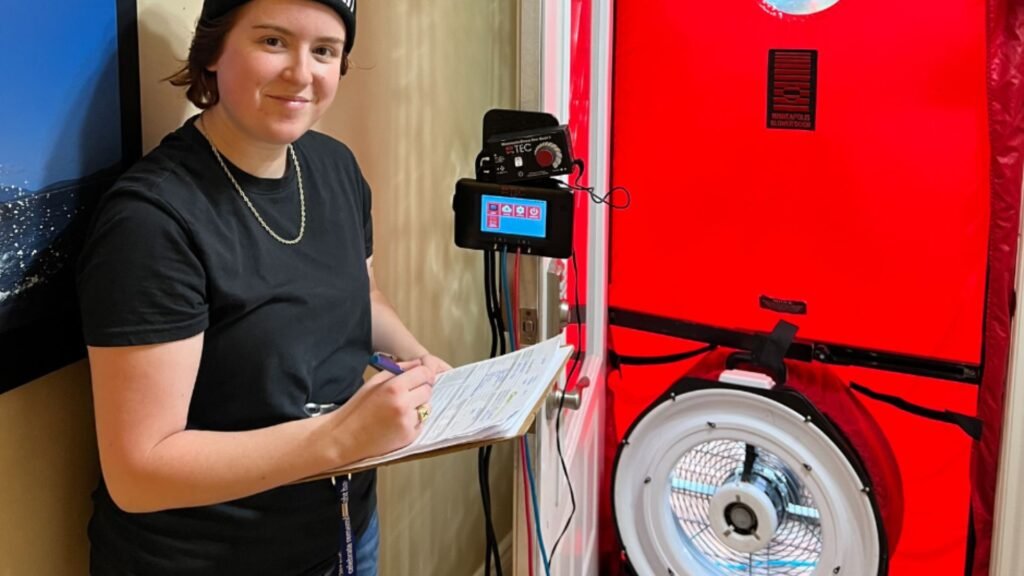
We assess home size, construction type, and number of stories, then prepare the building by closing all windows and exterior doors, opening all interior doors, and turning off HVAC and combustion appliances before testing begins.
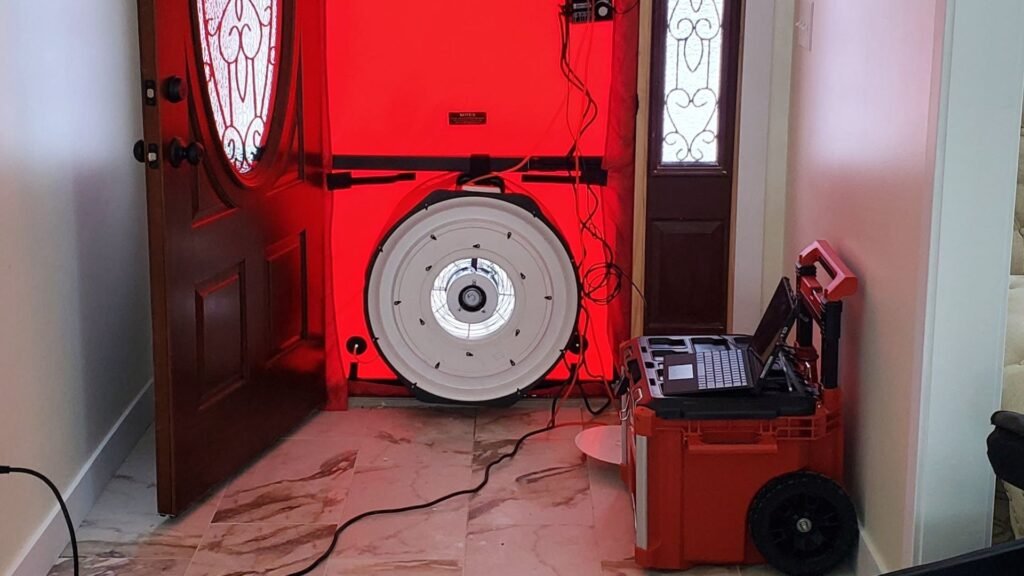
We mount the Minneapolis Blower Door fan and adjustable frame in an exterior door opening, connect the digital manometer and pressure gauges, and verify an airtight seal around the door frame before starting the fan.
We run the fan to depressurize the home to 50 pascals below outdoor pressure and measure airflow in CFM 50, optionally running a pressurization test to push air outward and locate specific infiltration points.
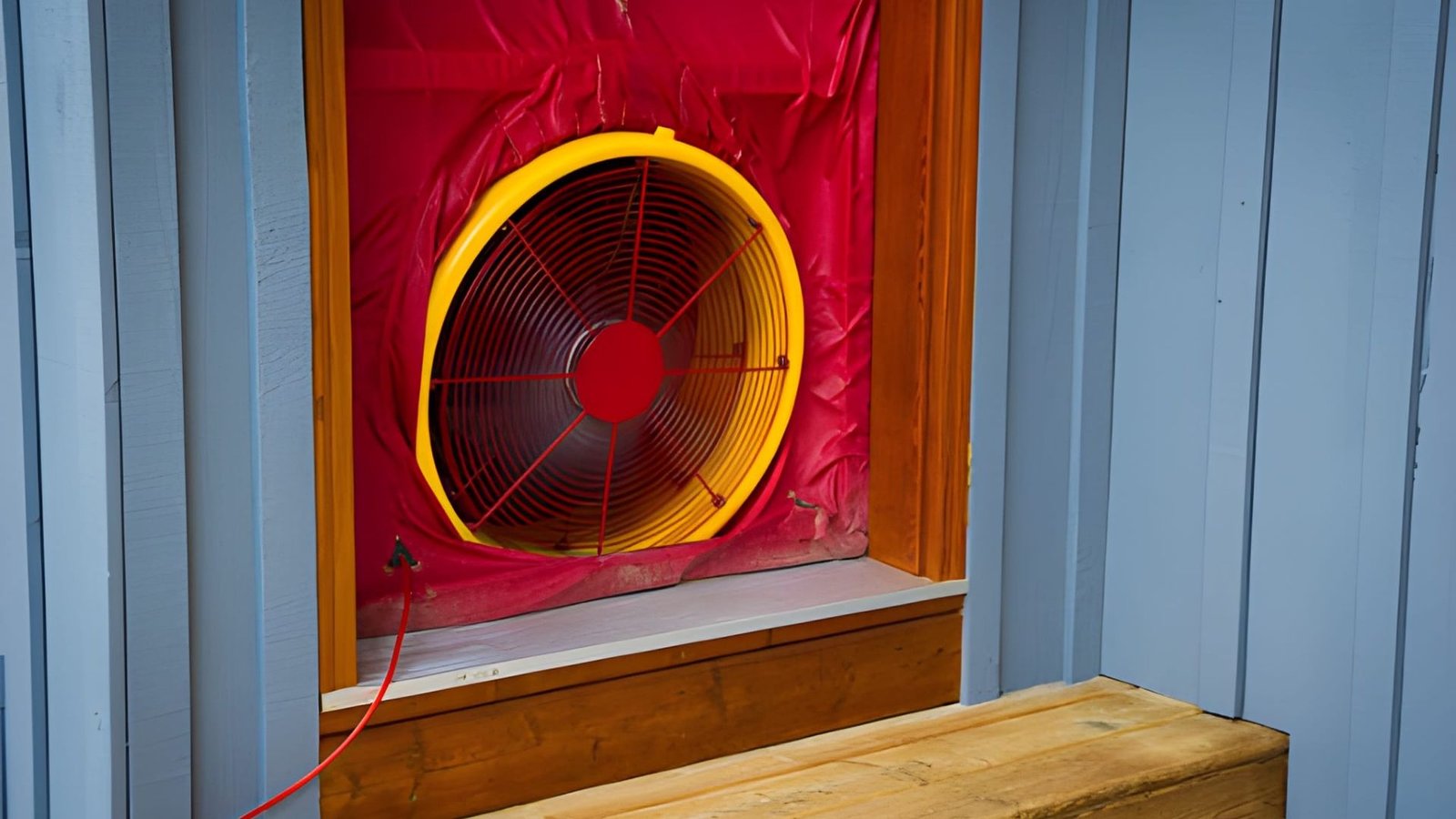
We record CFM 50 measurements at multiple pressure points, calculate ACH 50 using home volume, and compare results against the IECC Climate Zone 5 code requirement of ≤3 ACH 50.

We deliver a written ACH50 and CFM50 results report, identify the most significant air leakage areas, and provide prioritized air sealing recommendations formatted for permit submission if required.

Residential blower door test in the Chicagoland market costs $240–$440 for a standard single-family home. New construction code compliance testing runs $200–$400 and includes an official ACH 50 report for permit submission. Combined blower door and thermal imaging inspection costs $400–$700. Commercial blower door testing starts at $400 and varies by building size. Contact Qute Insulation for a free consultation and an exact blower door testing cost quote before any work begins.

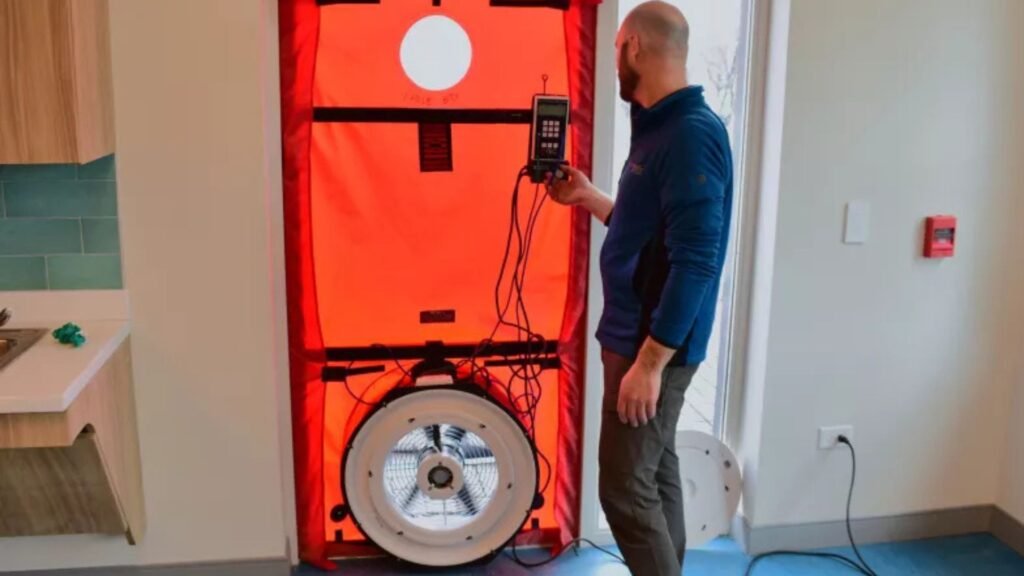
DIY blower door kits can approximate air leakage, but only professional Minneapolis Blower Door testing with a calibrated system produces ACH 50 results accepted for Illinois and Indiana building code compliance and ENERGY STAR certification. DIY kit results lack the accuracy, calibration documentation, and certified interpretation needed to guide air sealing investment or satisfy building department requirements in Chicagoland and NW Indiana.
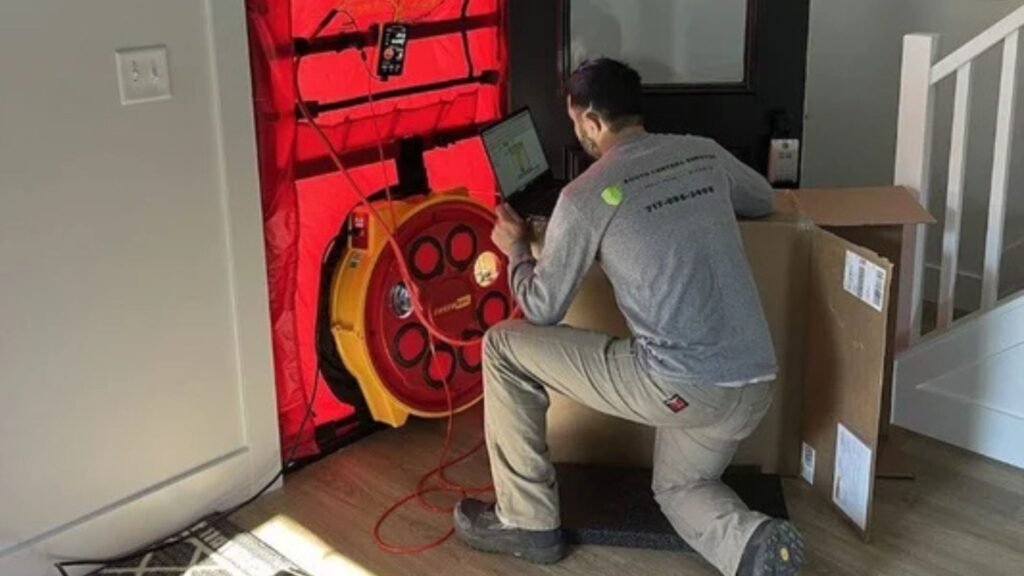
A visual inspection cannot quantify air leakage or locate hidden bypasses a blower door test measures the entire building envelope’s airtightness in a single diagnostic and delivers actionable CFM 50 and ACH 50 data. Visual inspection finds obvious surface gaps; blower door testing finds every bypass hidden inside attic floors, wall cavities, and rim joist bays that visual inspection physically cannot access.
Not all blower door test companies near me offer the same level of documentation and follow-through. Qute Insulation is a full-service option among blower door testing companies near me because we don’t just hand you a number and leave we explain what your ACH50 result means, recommend specific air sealing fixes if leakage is high, and can perform the sealing work ourselves. That makes us one of the few blower door test providers in Chicagoland and NW Indiana who close the loop from diagnosis to fix.
Our BPI Building Analyst and RESNET-certified testers bring experience with Illinois 2021 IECC new construction testing and Indiana residential code compliance. Licensed and insured for residential and commercial blower door testing.
Qute Insulation uses professional-grade Minneapolis Blower Door equipment, calibrated, accurate, and accepted for building code compliance and ENERGY STAR certification across Chicagoland and NW Indiana.
Written quotes specify test type, deliverables including ACH 50 report and permit documentation, and total cost before any testing begins. Free consultations available from Gary, IN to Joliet, IL.
Our team knows Illinois 2021 IECC and Indiana state energy code ACH50 requirements, Chicagoland building department submission formats, and the air leakage patterns of regional home construction types.
Qute Insulation serves homeowners, new construction contractors, energy auditors, and commercial building owners on both sides of the state line. Our Lynwood headquarters is 10 minutes from the Indiana border, giving us fast response times for blower door tests in Gary, Crown Point, Hammond, Munster, Dyer, Merrillville, Schererville, and Highland. We also serve Homewood, Flossmoor, Park Forest, Joliet, and Monee on the Illinois side. Whether you need a one-time diagnostic test or pre and post air sealing verification, our certified testers cover your area.
Flossmoor, IL | Homewood, IL | Park Forest, IL | Monee, IL | Joliet, IL | Chicago, IL | Naperville, IL | Aurora, IL | Elgin, IL | Schaumburg, IL | Orland Park, IL | Tinley Park, IL | Oak Lawn, IL | Berwyn, IL | Cicero, IL
Gary, IN | Crown Point, IN | Hammond, IN | East Chicago, IN | Whiting, IN | Griffith, IN | Highland, IN | Munster, IN | Dyer, IN | Schererville, IN | Merrillville, IN | Hobart, IN | Portage, IN | Valparaiso, IN | Lake Station, IN
The Blower Door test is non-invasive; the Minneapolis Blower Door fan mounts temporarily in a door frame, requiring no drilling, cutting, or property damage. Before depressurization testing, all gas appliances, water heater pilots, and combustion equipment are verified off to prevent backdrafting. All tests are performed per ASTM E779 and ASTM E1827 standard test methods and IECC protocol. Qute Insulation is licensed, insured, and certified on every project.
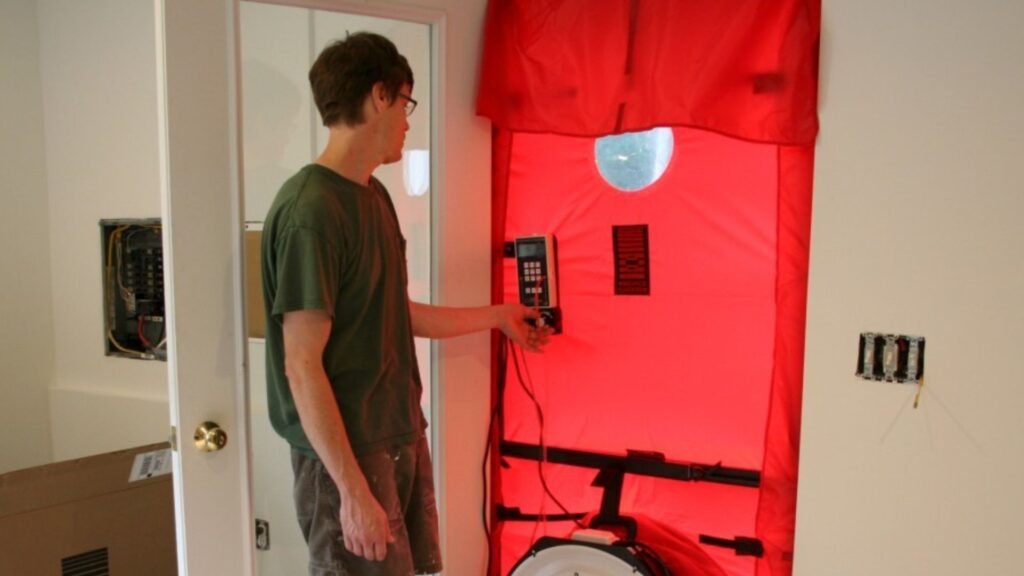
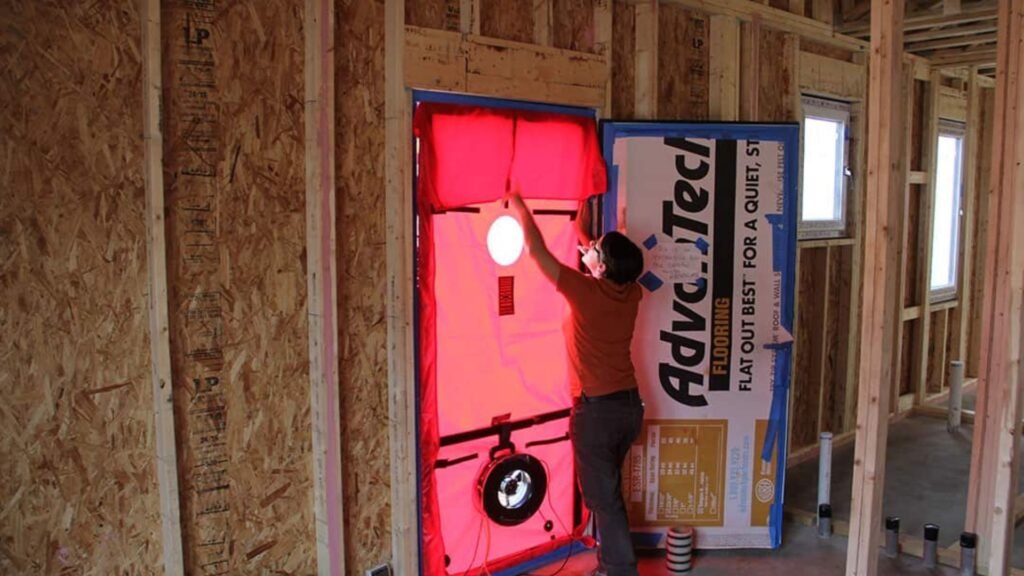
Every blower door test delivers a written report with CFM 50 and ACH 50 measurements compared against the IECC code requirement of ≤3 ACH 50 for Climate Zone 5 new construction, with prioritized air sealing recommendations included. For new construction in Illinois and Indiana, the report is formatted for building department permit submission. Post-air sealing retesting verifies improvements meet code and confirms energy savings are real.
In Illinois, a blower door test is required for new residential construction permits under the 2021 IECC. Indiana’s residential energy code allows either a blower door test or field verification of air sealing, though many builders choose testing for documented results. For existing homes, testing isn’t legally required but is strongly recommended before and after air-sealing work. Pre-work testing establishes a baseline, and post-work testing proves the improvement and verifies your investment paid off.
A blower door test is a diagnostic procedure that measures how much air leaks into or out of your home through the building envelope. A calibrated fan pressurizes or depressurizes the house while gauges track the airflow needed to maintain a set pressure difference, revealing your home’s ACH50 airtightness rating.
Blower door test cost in Chicagoland and NW Indiana varies based on home size and whether it’s a standalone test or bundled with air sealing work. Qute Insulation provides a free, no-obligation quote before any work begins.
A standard blower door test takes 30 minutes to an hour for most homes. If it’s combined with a full home energy audit or thermal imaging inspection, plan for closer to 2-3 hours.
Results are reported as CFM50 and ACH50. Lower numbers mean a tighter, more energy-efficient home. Climate Zone 5 (Chicagoland & NW Indiana) targets ≤3 ACH50 for new construction; older existing homes often test significantly higher, which is where air sealing opportunities show up.
Yes. We test both existing homes and new construction throughout Northwest Indiana, including Gary, Crown Point, Hammond, Munster, and Valparaiso. Existing homeowners usually book a test before and after air sealing to verify the improvement, while builders order code compliance testing with an official ACH50 report.
For new construction in IECC Climate Zone 5, the code requirement is ≤3 ACH50. ENERGY STAR Certified Homes require ≤3 ACH 50. Passive House standard requires ≤0.6 ACH 50. Existing older Chicago bungalows commonly test at 8–15 ACH40, indicating significant energy loss through unsealed bypasses, rim joists, and wall penetrations throughout the building.
CFM40 measures cubic feet of air per minute leaking through the building envelope at 40 pascals. ACH 50 divides CFM 50 by home volume to calculate air changes per hour, the standard code comparison metric. Lower numbers mean a tighter building. Qute Insulation’s written report explains all results in plain language with specific air sealing recommendations included.
A depressurization test pulls air out, the standard method for ACH40 code compliance measurement per ASTM E779. A pressurization test pushes air in, useful for locating specific infiltration entry points. Most blower door tests use depressurization; Qute Insulation performs both for comprehensive air leakage diagnostics in Chicagoland and NW Indiana homes.
Yes, combining a blower door test with FLIR thermal imaging is the most powerful air leakage diagnostic available. The depressurization reveals exactly where cold air infiltrates as visible cold streaks on walls, ceilings, and around penetrations, making every hidden air leak visible during the inspection in NW Indiana and Chicagoland homes.
Ideally, a pre-installation blower door test establishes a baseline ACH 50 and identifies exactly where air sealing is needed; a post-installation test verifies the improvement meets IECC code. For new construction in Illinois and Indiana, the post-air sealing test is required for building permit and certificate of occupancy approval.
A qualified blower door tester should hold BPI Building Analyst or RESNET certification and use calibrated Minneapolis Blower Door equipment. For blower door test certification purposes, Qute Insulation delivers official ACH50 reports accepted by Chicagoland and NW Indiana building departments for permit submission, certificate of occupancy, and ENERGY STAR program documentation.
Yes. A door blow test is simply another name homeowners use for a blower door test. Both refer to the same diagnostic: a calibrated fan mounted in an exterior door frame measures how much air leaks through your home at a 50-pascal pressure difference.
High energy bills, failed permit inspections, and undetected air leaks are problems a certified blower door test solves in a single visit. Qute Insulation brings BPI- and RESNET-certified testers, professional Minneapolis Blower Door equipment, and a written ACH50 report to Gary, Crown Point, Flossmoor, Homewood, Park Forest, Monee, and Joliet. Call 1-708-808-7870 for your free consultation today. Don’t guess where your energy dollars are going.