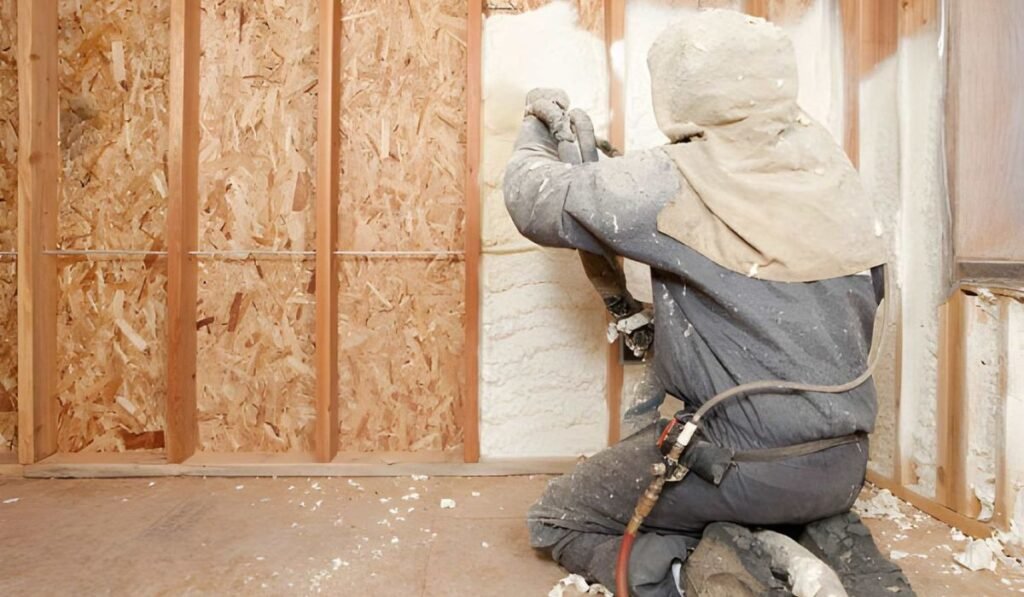
Spray foam insulation is a two-component polyurethane system that expands on contact to seal air leaks and insulate simultaneously, making it the highest-performance solution for Chicagoland’s extreme winters. Qute Insulation installs both open cell and closed cell spray foam insulation across Chicagoland and Northwest Indiana using professional-grade spray foam rig equipment.
Spray foam is a two-component polyurethane system, isocyanate plus polyol resin that expands on contact to create a continuous air and thermal barrier. Open cell delivers R-3.7 per inch; closed cell reaches R-6.5 per inch. No traditional insulation matches this in Chicagoland’s freeze-thaw climate.
Spray foam delivers performance advantages that no traditional insulation material can replicate.
Spray foam is the only insulation acting simultaneously as an air barrier and thermal insulator. Closed cell reaches R-6 to R-7 per inch. In Chicagoland's freeze-thaw climate, sealing rim joists and band joists in older brick bungalows stops the cold air infiltration, driving Nicor Gas bills higher each winter.
Closed-cell foam is a Class II vapor retarder with a fully waterproof surface. For NW Indiana crawl spaces and Chicago basements with seasonal water infiltration, closed cell eliminates moisture pathways that lead to mold growth it does not absorb water under any conditions.
Open-cell foam's soft cell structure absorbs sound waves more effectively than closed-cell or fiberglass insulation. For Chicago homes near transit lines and airports, and NW Indiana commercial properties in mixed-use areas, open-cell spray foam soundproofing in walls and ceilings delivers measurable acoustic improvement.
DOE and ENERGY STAR data show spray foam air sealing reduces heating and cooling costs by 20–40%. For Chicagoland homeowners, that means lower ComEd and Nicor Gas bills every season. Energy code compliance in Illinois and Indiana also supports stronger home appraisals at resale.
Posted on GoogleTrustindex verifies that the original source of the review is Google. I Received A Great Quote, & Derrick Is Very Professional,He Explained Everything In Detail, He Gets An A +++ 🙏Posted on GoogleTrustindex verifies that the original source of the review is Google. Excellent work and very professional. Blew installation into my split-level inside wall. Performed the job from the top level of the inside wall and the bottom. I highly recommend this company. 5 Stars *****Posted on GoogleTrustindex verifies that the original source of the review is Google. Great folks and great workPosted on GoogleTrustindex verifies that the original source of the review is Google. I processed my request online and Derrick contacted me within minutes to schedule an in person quote he matched price and schedule the same week my work. Very responsible, professional and everything was done within hours they left my house cleaned and very happy with their job !!! 100% recommended!!Posted on GoogleTrustindex verifies that the original source of the review is Google. Attic installation was done well and price was reasonable.Posted on GoogleTrustindex verifies that the original source of the review is Google. After removing my attic insulation completely, cleaning and disinfecting, the team of professionals installed the new insulation in record time. They were very professional and thorough. I can feel the difference in one day. They were polite, helpful and cleaned up completely when the job was finished. I highly recommend this company.
Qute Insulation installs every spray foam application for residential and commercial properties.
Lightweight, flexible, approximately R-3.7 per inch; ideal for interior walls, ceilings, and soundproofing in Chicagoland homes.
High-density, waterproof, approximately R-6.5 per inch;,maximum performance for basements, crawl spaces, and exterior walls.
Fills every stud cavity and gap for a complete, continuous air and thermal barrier in Chicago homes.
Stops heat loss at the roofline; keeps NW Indiana homes comfortable through polar vortex winters and humid summers.
Closed-cell foam seals moisture entry and cold air infiltration in NW Indiana and Chicago crawl spaces.
Keeps attached garages temperature-controlled; reduces heat loss into living spaces above or adjacent to the garage.
Applied to roof decking; protects from moisture, ice dams, and extreme temperature swings during Chicagoland winters.
Large-scale insulation for steel buildings, warehouses, and commercial properties across Chicagoland using a professional-grade spray foam rig.
Every Qute Insulation project follows a strict five-step process.

We inspect insulation gaps, air leakage points, moisture issues, and substrate condition to determine whether open-cell or closed-cell foam suits the application.

We recommend the correct foam type based on location, crawl space, attic, wall, or commercial, and your R-value targets, moisture exposure, and budget.

We mask all surfaces, seal HVAC vents, protect flooring and belongings, and set up ventilation and a professional spray foam rig before application begins.

We apply two-component polyurethane foam with our professional rig; foam expands on contact, filling every gap and cavity to achieve the target R-value.

We inspect foam depth and coverage, trim excess flush, verify R-value, remove all masking, complete full cleanup, and provide homeowner re-entry guidance.
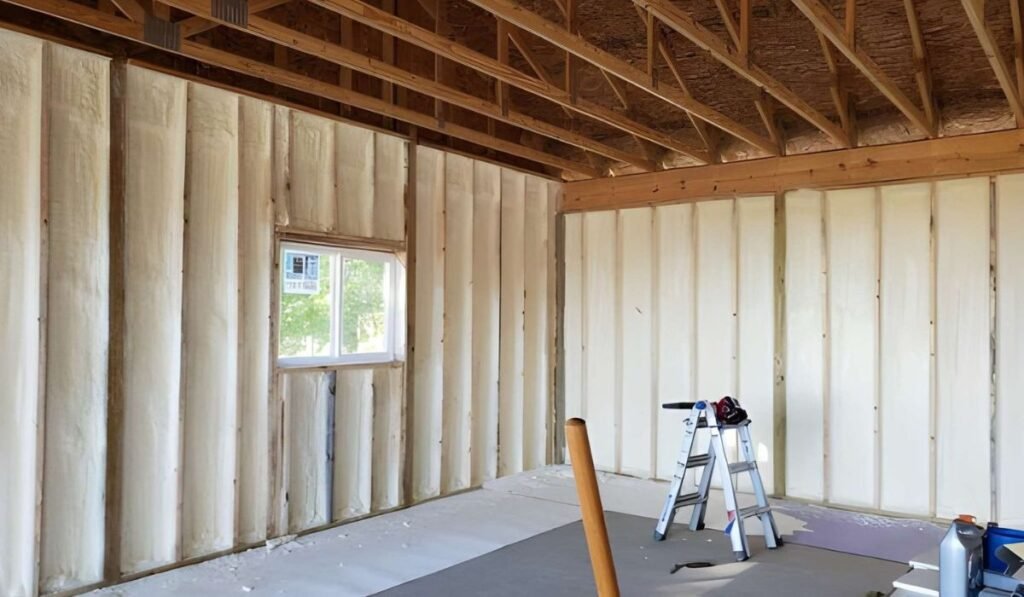
Open cell spray foam runs $0.44–$0.65 per board foot, approximately $1.00–$1.40 per square foot at two inches. Closed cell runs $1.00–$2.00 per board foot, approximately $2.00–$4.00 per square foot. Most Chicagoland homeowners recover costs in three to seven years. Contact Qute Insulation for a free estimate.

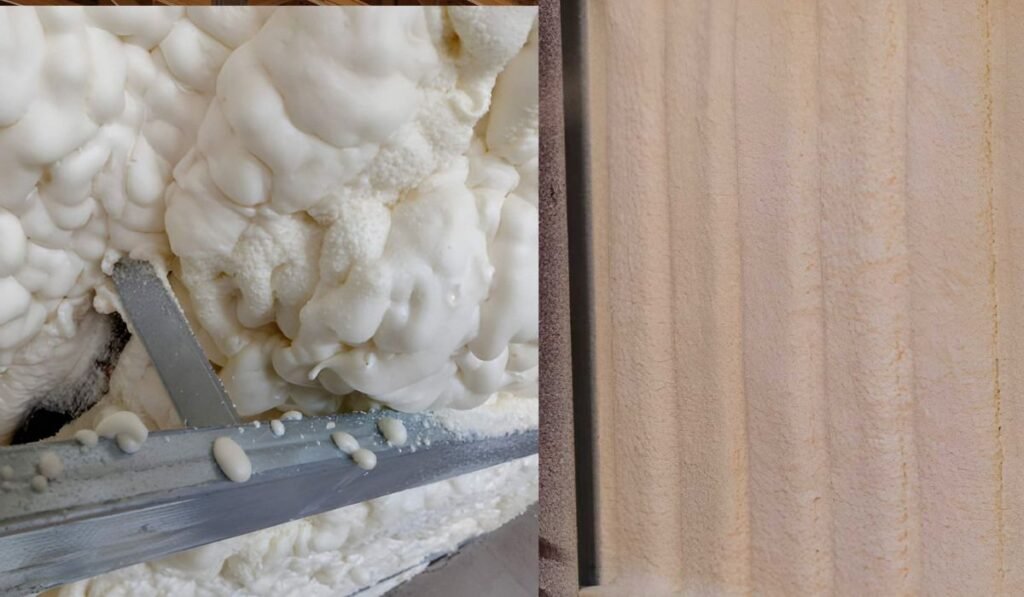
For Chicagoland homeowners, closed-cell spray foam is best for moisture-exposed areas like crawl spaces and basements, while open-cell is better suited for interior walls and soundproofing applications. Closed cell costs two to three times more but delivers R-6.0 to R-7.0 per inch and acts as a Class II vapor barrier.
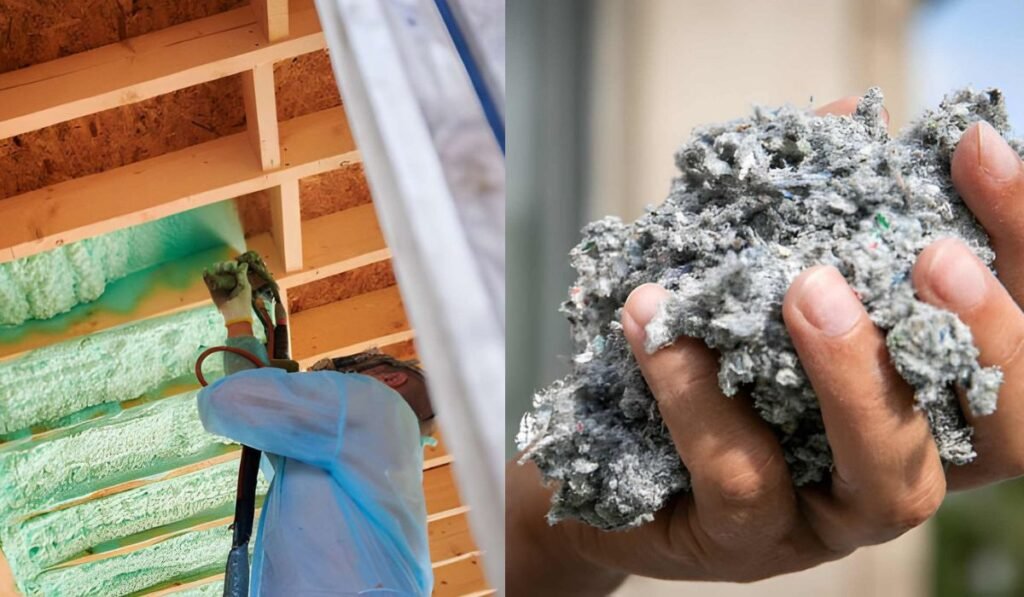
Spray foam seals air leaks completely, fiberglass batts do not, leaving air infiltration pathways open throughout the wall assembly. Spray foam costs three to five times more per square foot, but for older Chicago bungalows and NW Indiana ranch homes, that premium delivers compounding annual energy savings fiberglass cannot match.
Qute Insulation's applicators are trained consistent with SPFA (Spray Polyurethane Foam Alliance) standards in foam chemistry, mix ratios, and thickness calibration. Our team handles residential crawl spaces, attics, rim joists, and commercial steel buildings across Chicagoland. Licensed and insured on every project.
Our spray foam rig uses a calibrated proportioner, heated hoses, and a spray gun, maintaining a precise 1:1 mix ratio and correct output pressure. DIY two-component kits and aerosol cans are engineered for small crack-filling only they cannot deliver uniform depth or correct R-value for whole-area applications.
Qute Insulation provides written quotes specifying foam type, board foot calculation, and target depth before work begins. No cost surprises after the rig starts. Pricing is consistent from Crown Point, IN to Joliet, IL. Free estimates available with no obligation on every project.
Our team knows IECC Climate Zone 5 requirements, Illinois and Indiana energy codes, and insulation vulnerabilities in Gary, Homewood, Flossmoor, and Monee homes. Lake-effect cold and freeze-thaw cycles demand spray foam's complete air sealing, something no fiberglass batt installation provides.
[James Anderson], [Flossmoor, IL]: "Our NW Indiana crawl space flooded every spring, and our Nicor Gas bill ran over $300 all winter. After Qute Insulation sealed it with closed-cell spray foam, our heating bill dropped $90 per month, and the moisture problem is completely gone."
Qute Insulation serves Chicagoland and Northwest Indiana for residential and commercial open-cell and closed-cell spray foam projects.
Flossmoor, IL | Homewood, IL | Park Forest, IL | Monee, IL | Joliet, IL | Chicago, IL | Naperville, IL | Aurora, IL | Elgin, IL | Schaumburg, IL | Orland Park, IL | Tinley Park, IL | Oak Lawn, IL | Berwyn, IL | Cicero, IL
Gary, IN | Crown Point, IN | Hammond, IN | East Chicago, IN | Whiting, IN | Griffith, IN | Highland, IN | Munster, IN | Dyer, IN | Schererville, IN | Merrillville, IN | Hobart, IN | Portage, IN | Valparaiso, IN | Lake Station, IN
Not sure if we serve your area? Call us we cover a wide range of Chicagoland and Northwest Indiana communities for both residential and commercial spray foam projects.
Two-component spray foam off-gasses isocyanates during application. Our installers wear respirators, protective suits, and gloves throughout. Re-entry time is 24 hours once the foam is fully cured and ventilated. Once cured, spray foam is inert and safe. DIY improper mixing causes uncured foam and dangerous isocyanate exposure.

Closed-cell spray foam lasts 80-plus years with no settling, sagging, or maintenance required. Open cell has a very long lifespan but warrants periodic inspection in high-humidity applications. Where exposed in living spaces, spray foam must be covered with drywall per ICC fire codes Qute Insulation documents all requirements at project handoff.
Spray foam is a two-component polyurethane system, isocyanate and polyol resin, expanding on contact to fill every gap and create a continuous air and thermal barrier. Available in open cell (R-3.7 per inch) and closed cell (R-6.5 per inch), applied using professional spray foam rig equipment.
Open cell is soft, R-3.7 per inch, lower cost, and breathable, best for interior walls and soundproofing in Chicagoland homes. Closed cell is rigid, R-6.5 per inch, waterproof, and higher cost best for NW Indiana crawl spaces, Chicago basements, and moisture-prone exterior applications.
Yes for Chicagoland homes with air infiltration or high energy bills, spray foam pays back in three to seven years through ComEd and Nicor Gas savings. Closed cell adds structural rigidity and requires no maintenance or replacement for the building’s lifetime.
Open cell runs approximately $1.00–$1.40 per square foot at two inches; closed cell runs $2.00–$4.00 per square foot at two inches in the Chicago and NW Indiana market. Total cost depends on foam type, area size, and location. Qute Insulation provides free written estimates.
For air sealing, spray foam is superior because it creates a continuous barrier that fiberglass batts and blown-in cellulose cannot match. For budget-sensitive large-area attic coverage, blown-in cellulose remains cost-effective when combined with spray foam air sealing at rim joists.
Yes, closed-cell spray foam is one of the best solutions for NW Indiana crawl spaces and attached garages. It seals moisture intrusion, blocks cold air infiltration, and withstands Northwest Indiana’s freeze-thaw temperature extremes without sagging or degrading over time.
Closed-cell spray foam lasts 80-plus years with no settling, degradation, or replacement needed. Open cell also has a very long lifespan. Neither requires maintenance once properly installed and covered per the ICC fire code, where exposed in living spaces.
Closed-cell spray foam is fully waterproof and acts as a Class II vapor retarder, physically blocking moisture infiltration. It is highly effective for moisture-prone Chicago basements and NW Indiana crawl spaces. Open-cell foam is not waterproof and should not be used in high-moisture applications.
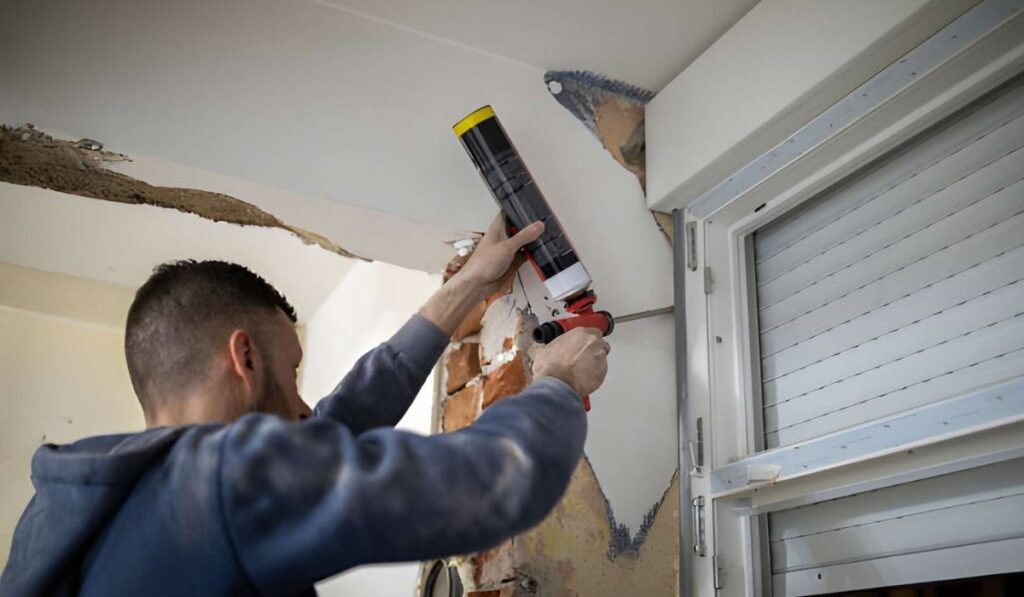
DIY spray foam kits and aerosol cans suit only small gaps and cracks, not full insulation applications. Whole-area spray foam requires a professional rig with calibrated proportioners and heated hoses. Improper DIY mixing results in uncured foam and hazardous isocyanate exposure.
Pros: highest R-value per inch, simultaneous air sealing, waterproof closed cell, 80-plus year lifespan, no settling. Cons: the highest upfront cost of any insulation type, professional installation required, 24-hour re-entry after application, and drywall cover required where exposed per ICC fire codes.
Chicagoland winters cost you money through air leaks spray foam permanently seals. Qute Insulation brings SPFA-trained installers, professional rig equipment, and transparent pricing to Gary, Crown Point, Flossmoor, Homewood, Park Forest, Monee, and Joliet. Call [1-708-808-7870]for your free spray foam estimate today.