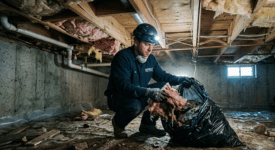
Humidity and flooding in Chicago, Joliet, Gary, Homewood, Crown Point, and beyond can wreak havoc on crawl spaces. Left unchecked, these damp environments lead to mold growth, wood rot, pest infestations, and high energy bills. Crawl space encapsulation stops these problems before they start. At Qute Insulation, we specialize in sealing and insulating crawl spaces across Chicagoland and Northwest Indiana. Our solutions keep your home dry, energy-efficient, and healthy – even during our humid Indiana summers and rainy Chicago winters.
A wet, leaky crawl space can cause major headaches:
Heavy rain or poor drainage leads to puddles
under the floor, raising humidity and inviting
mold.
Excess moisture fuels mold growth on wood beams and insulation, triggering allergies and structural decay.
Termites, rodents, and insects love damp spaces. Encapsulation seals entry points, blocking pests
out.
An unsealed crawl space leaks cold air in winter and hot air in summer. Your HVAC works harder to compensate.
Over time, moisture can rot floor joists and subfloor materials, leading to uneven floors and expensive repairs.
More than half of the air in your living space comes from the crawl space . Leaving it damp can send musty, allergen-filled air into your home.
We follow a thorough, step-by-step process to permanently dry out your crawl space:

We start by inspecting the crawl space entry, vents, and existing insulation. Any water or debris is cleaned out, and if present, moldy or damaged insulation is safely removed. (See our Insulation Removal service for more on this.)
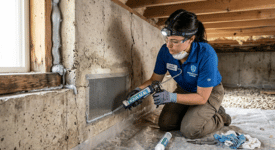
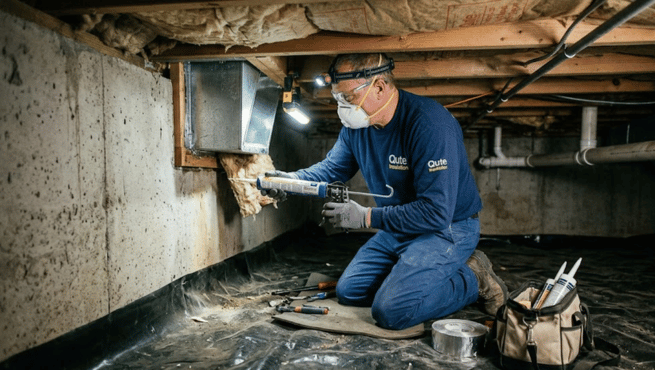
All foundation vents are sealed, and gaps or cracks in foundation walls are caulked or foamed. This prevents humid outdoor air from entering the crawl space.
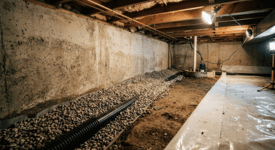
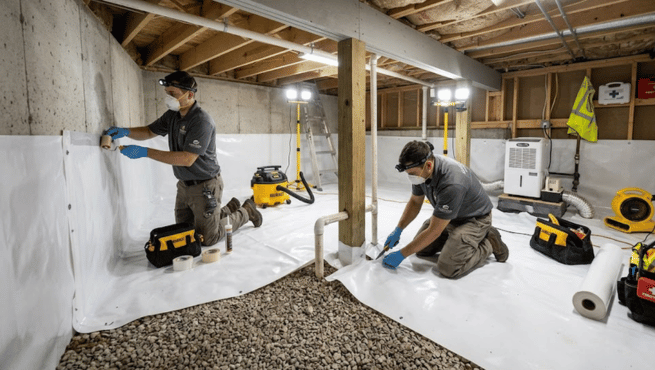
If standing water is found, we install drainage solutions. This may include a perimeter trench with gravel or a drain tile system to channel water away.
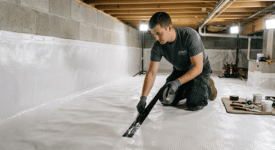
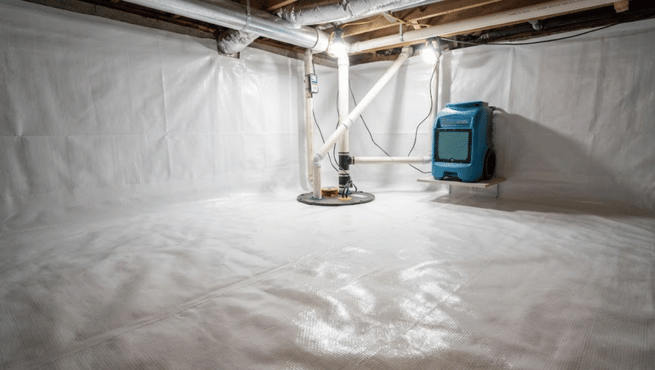
We line the entire crawl space floor and lower walls with a thick, reinforced polyethylene liner (typically 20–30 mil). The seams are taped, and the liner is sealed at the walls. This vapor barrier stops ground moisture from evaporating into the space.
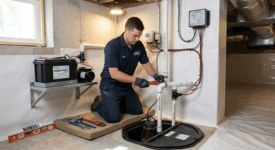
In areas prone to flooding (common in Chicago-area basements), we install a battery-backup sump pump. Any water entering the crawlspace is pumped out and away from your home.
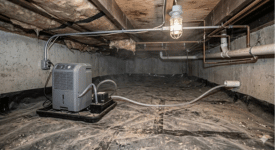
In humid climates like Indiana, we recommend a dehumidifier. A crawl space dehumidifier removes excess moisture from the air, keeping relative humidity at healthy levels year-round.
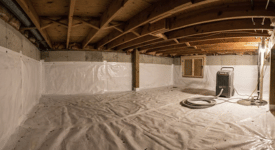
We often add an access hatch cover to ensure the encapsulation seal is complete. The end result is a completely sealed, insulated crawl space.
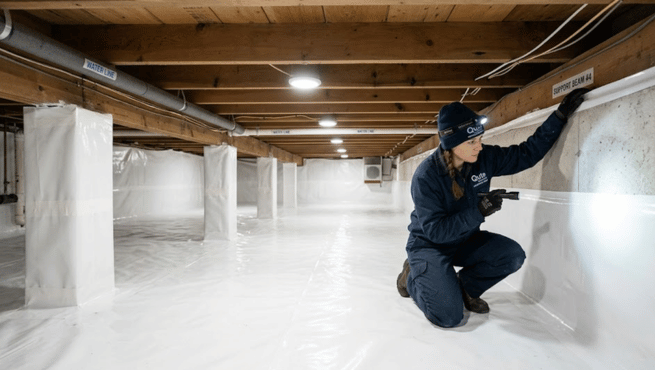
We follow a thorough, step-by-step process to permanently dry out your crawl space:
The heavy-duty liner and sealed vents eliminate moisture entry, preventing mold, mildew, and rot.
By insulating and sealing the crawl space, you reduce drafts and thermal loss. Homeowners often see heating/cooling savings of 10–20%.
With the crawl space sealed, mold spores and allergens are kept out of living spaces, improving air quality for your family.
Sealing off crawl space access keeps rodents and insects out, reducing infestations and damage.
Wood beams, joists, and subfloors stay dry, extending their lifespan and preventing costly repairs (no more warped floors or sagging joists).
An encapsulated crawl space stays clean and dry – you can even use it safely for storage of boxes or equipment.
Especially important in Northwest Indiana summers, our solutions keep crawl space humidity below 50%, preventing wood decay and musty odors.
Our region’s climate makes encapsulation crucial. In Joliet and Gary, high groundwater can lead to crawl space flooding, while Chicago’s variable temperatures stress the home envelope. By encapsulating, homes in Homewood, Flossmoor, Monee, Park Forest, and all around Chicago avoid:
Prevent flooding from sewer backups or heavy rains.
Sealed crawl spaces can mitigate ice dam build-up upstairs by keeping floors warmer.
Humid basements in Crown Point and Highland are prime mold growth zones. Encapsulation breaks that cycle for relief.
Choosing an expert team makes all the difference:
Look for signs like musty odors upstairs, visible mold or standing water under your floor, or high humidity (often measured with a hygrometer). If your floors are cold in winter or you have pest problems, encapsulation is likely needed.
With proper installation, encapsulation virtually eliminates moisture. We seal all vents and install barriers on the ground and lower walls. Any future water is managed by installed drain systems and sump pumps. We also recommend a dehumidifier to control humidity.
DIY crawl space encapsulation is risky. It requires specialized materials and careful sealing to be effective. Hiring experts like Qute Insulation ensures the job is done right (and meets local code). We are fully insured and trained for this work.
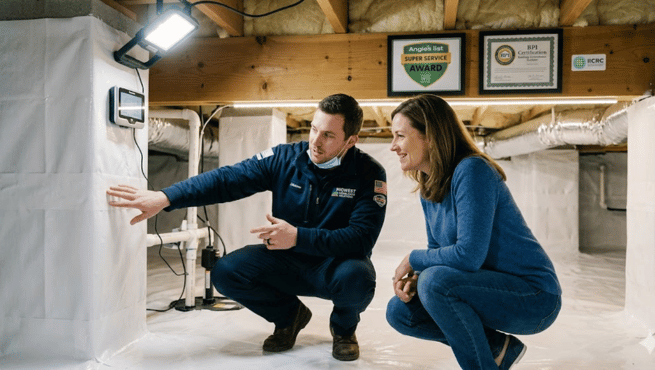
Most typical crawl spaces (1,000–1,500 sq ft) can be encapsulated in 1–2 days. Larger or more complex spaces may take longer. We’ll give you a timeline at your free inspection.
Absolutely. Encapsulation often pays for itself over a few years through energy savings and by avoiding repairs from mold or rot. Plus, it creates healthier air and a more comfortable home immediately.
Qute Insulation offers a long-term warranty on our work. We stand by our installations and will service any issues that arise.
Start improving your home’s comfort and efficiency today!
Call 1-708-808-7870 or click Request a Free Quote to schedule your no-obligation inspection.
Our friendly team is ready to help you save money from day one.