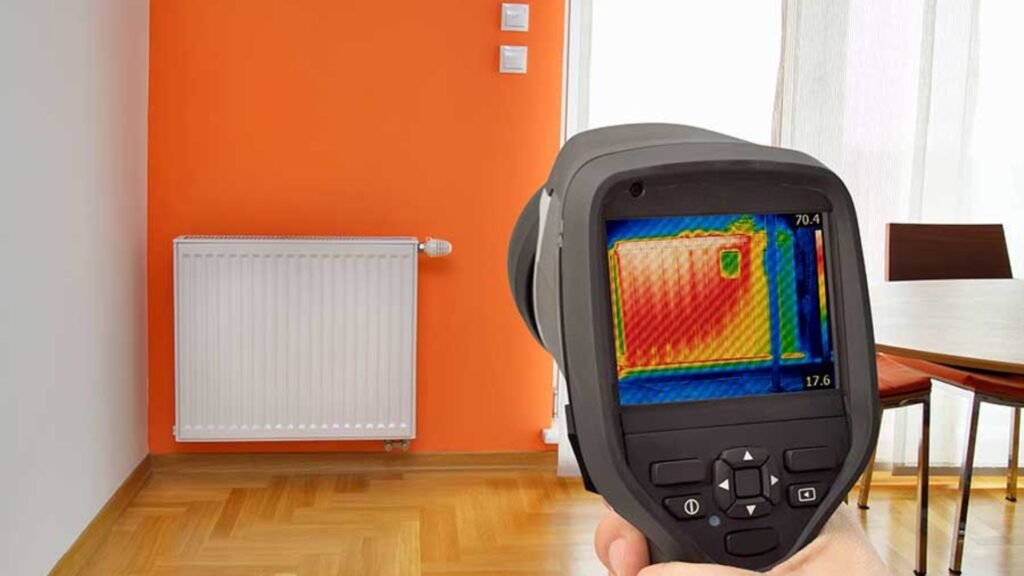
Thermal imaging inspection uses professional FLIR infrared cameras to detect temperature differentials across surfaces, revealing hidden heat loss, moisture, mold, insulation gaps, and electrical faults invisible to the naked eye. Qute Insulation provides professional thermal imaging Chicago homeowners trust for homes and commercial buildings across Chicagoland and Northwest Indiana.
Professional FLIR infrared cameras detect temperature differentials across surfaces, revealing insulation gaps, moisture intrusion, mold conditions, and electrical faults completely invisible to standard visual inspection. Thermal cameras do not see through walls; they detect surface temperature differences caused by hidden problems behind them. Qute Insulation provides professional thermal imaging inspection services for homes and commercial buildings across Chicagoland and NW Indiana.
Thermal imaging is especially critical in Chicagoland and NW Indiana. Freeze-thaw cycles drive moisture into older Chicago bungalows and two-flats. Lake-effect humidity creates hidden mold conditions behind walls. Winter heat loss through unsealed attic bypasses is invisible without infrared inspection. A thermal scan before insulation installation identifies every air sealing priority, preventing wasted investment.
Infrared thermal imaging reveals insulation gaps, attic bypasses, and air leaks as cold thermal anomalies instantly, pinpointing exactly where heat escapes in Chicagoland homes without opening walls, ceilings, or floors.
Moisture behind walls creates temperature differentials visible on infrared cameras before mold appears. In older Chicago bungalows and NW Indiana homes, thermal imaging detects winter moisture intrusion before it causes structural damage or visible mold growth.
Overheating electrical panels, circuit breakers, wiring connections, and switchboards appear as hot spots on infrared cameras. Electrical thermal imaging in Chicagoland commercial buildings identifies fire hazards and failing components before they cause outages or fires.
Thermal imaging eliminates guesswork, homeowners invest only where heat loss, moisture, or damage actually exists. A pre-insulation thermal scan in NW Indiana homes routinely saves hundreds to thousands in unnecessary repair costs.
Posted on GoogleTrustindex verifies that the original source of the review is Google. I Received A Great Quote, & Derrick Is Very Professional,He Explained Everything In Detail, He Gets An A +++ 🙏Posted on GoogleTrustindex verifies that the original source of the review is Google. Excellent work and very professional. Blew installation into my split-level inside wall. Performed the job from the top level of the inside wall and the bottom. I highly recommend this company. 5 Stars *****Posted on GoogleTrustindex verifies that the original source of the review is Google. Great folks and great workPosted on GoogleTrustindex verifies that the original source of the review is Google. I processed my request online and Derrick contacted me within minutes to schedule an in person quote he matched price and schedule the same week my work. Very responsible, professional and everything was done within hours they left my house cleaned and very happy with their job !!! 100% recommended!!Posted on GoogleTrustindex verifies that the original source of the review is Google. Attic installation was done well and price was reasonable.Posted on GoogleTrustindex verifies that the original source of the review is Google. After removing my attic insulation completely, cleaning and disinfecting, the team of professionals installed the new insulation in record time. They were very professional and thorough. I can feel the difference in one day. They were polite, helpful and cleaned up completely when the job was finished. I highly recommend this company.
Qute Insulation provides a complete range of thermal imaging services for residential and commercial properties.
Infrared cameras detect moisture buildup and hidden mold conditions behind walls, ceilings, and floors in Chicagoland homes, before mold becomes visible, spreads, or creates health hazards. Catching these issues early supports better indoor air quality for Lynwood and surrounding Chicagoland homes.
A full-property infrared scan identifies insulation gaps, air leaks, attic bypasses, and thermal bridging, costing NW Indiana homeowners money on ComEd and Nicor Gas bills every month.
Professional infrared inspection detects overheating wiring, circuit breakers, switchboards, and electrical panel connections before they cause outages or fires, critical for older Chicagoland residential and commercial properties.
Infrared cameras locate hidden water leaks and moisture intrusion behind walls and under floors without cutting or drilling, saving property owners in Gary, Joliet, and across Chicagoland from costly, destructive testing.
Thermal imaging reveals missing insulation, attic bypasses, roof leaks, and heat escape points in Chicagoland attics, identifying exactly where heat is being lost before winter insulation installation begins.
Professional FLIR infrared inspections for warehouses, commercial buildings, and industrial facilities across Chicagoland, detecting equipment overheating, building envelope failures, HVAC inefficiencies, and electrical faults in large commercial structures.
Detailed thermal imaging documentation for insurance claims, legal investigations, and property damage assessments, providing court-admissible infrared reports and thermograms for Chicagoland property disputes and damage claims.
Aerial infrared inspection of large rooftops, commercial building envelopes, and hard-to-access structures across NW Indiana, detecting moisture, insulation failure, and heat loss without scaffolding or roof access.
A baseline thermal scan before insulation installation identifies all air sealing priorities and hidden defects, ensuring every insulation dollar is invested exactly where it delivers maximum energy savings in Chicagoland homes.
Every Qute Insulation thermal imaging inspection follows a clear five-step process.

We discuss property history, known problem areas, and inspection goals, determining optimal inspection conditions, as thermal imaging is most accurate with a 10°F or greater temperature differential between interior and exterior.
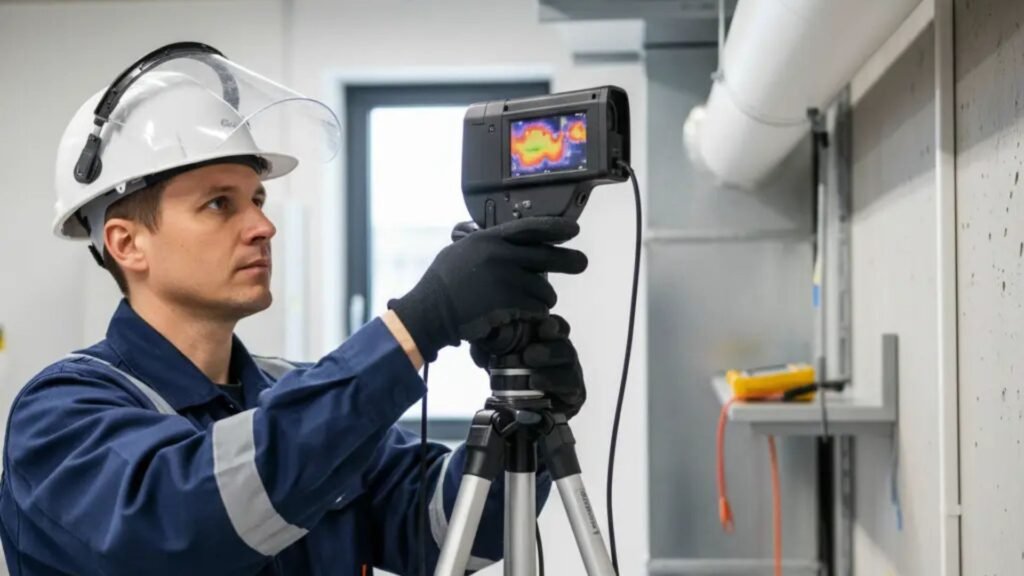
We conduct a systematic room-by-room FLIR infrared scan of the attic, walls, ceilings, electrical panels, and crawl space, capturing thermograms that document all temperature anomalies and potential problem areas.
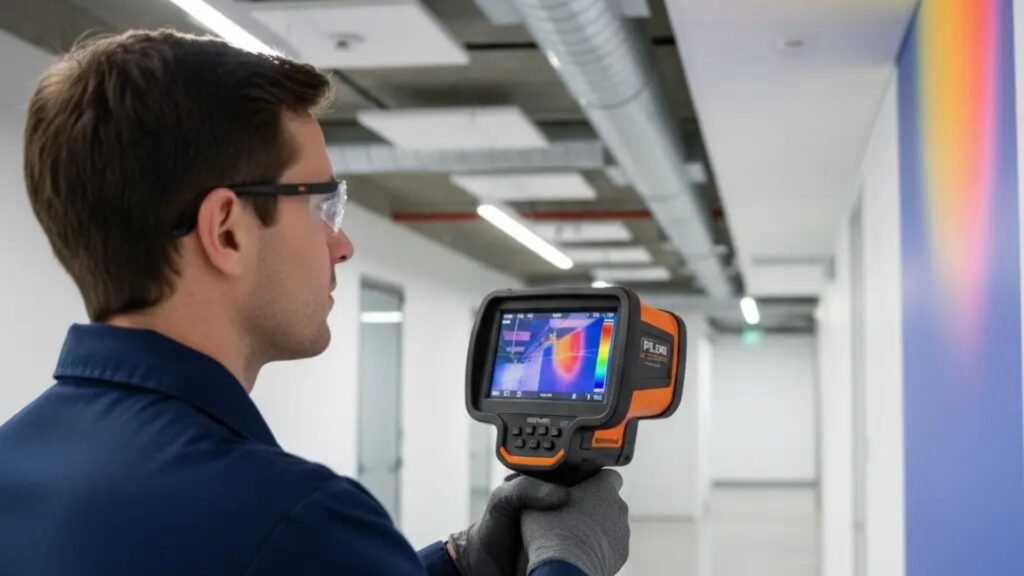
We analyze all captured thermograms and classify thermal anomalies, distinguishing between heat loss, moisture signatures, electrical hot spots, and structural issues using IRT-certified thermographer interpretation protocols.
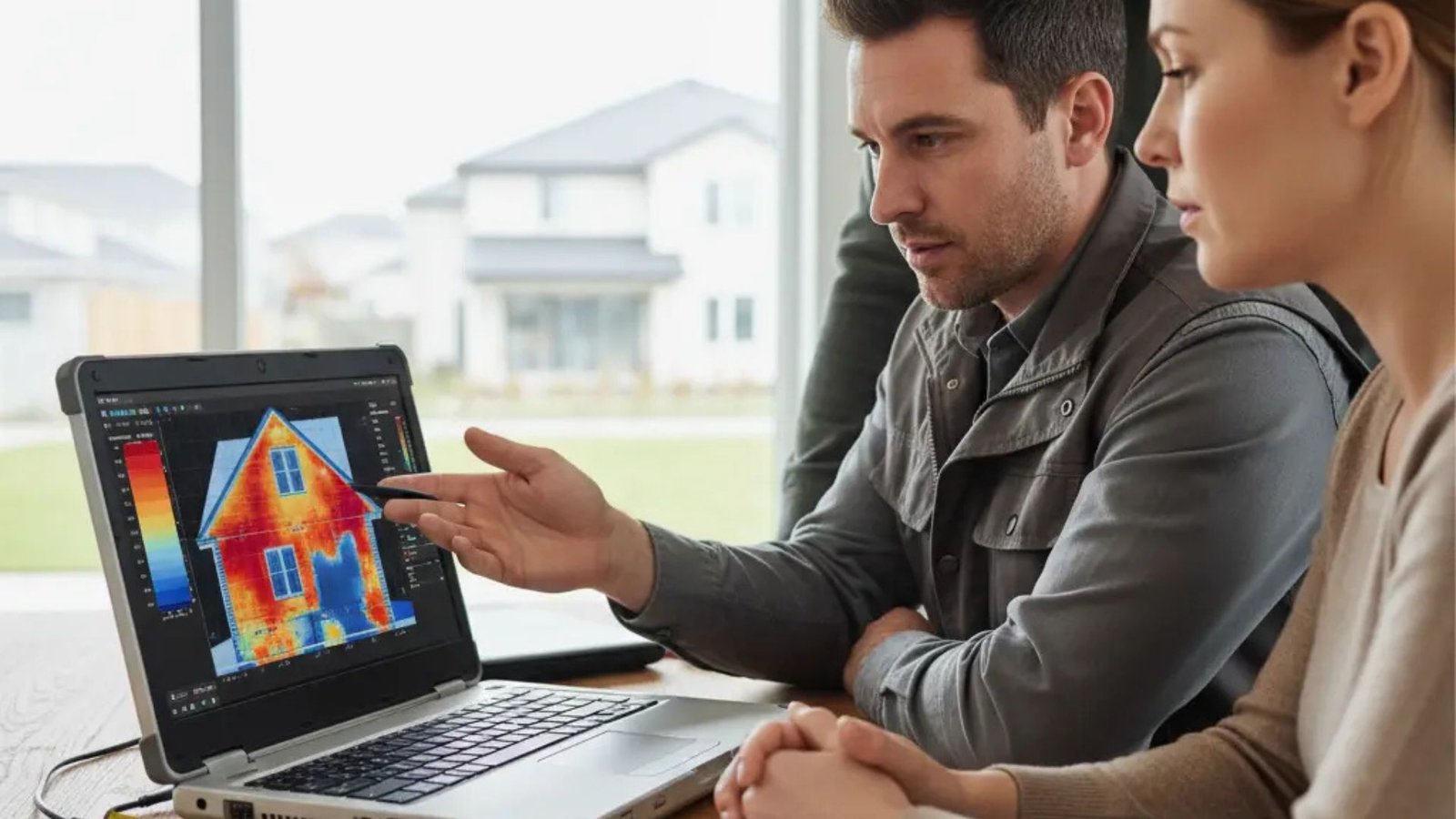
We mark all defect locations on a property floor plan and prioritize repairs by severity, immediate safety concerns like electrical faults first, then moisture and mold risks, then energy efficiency improvements.
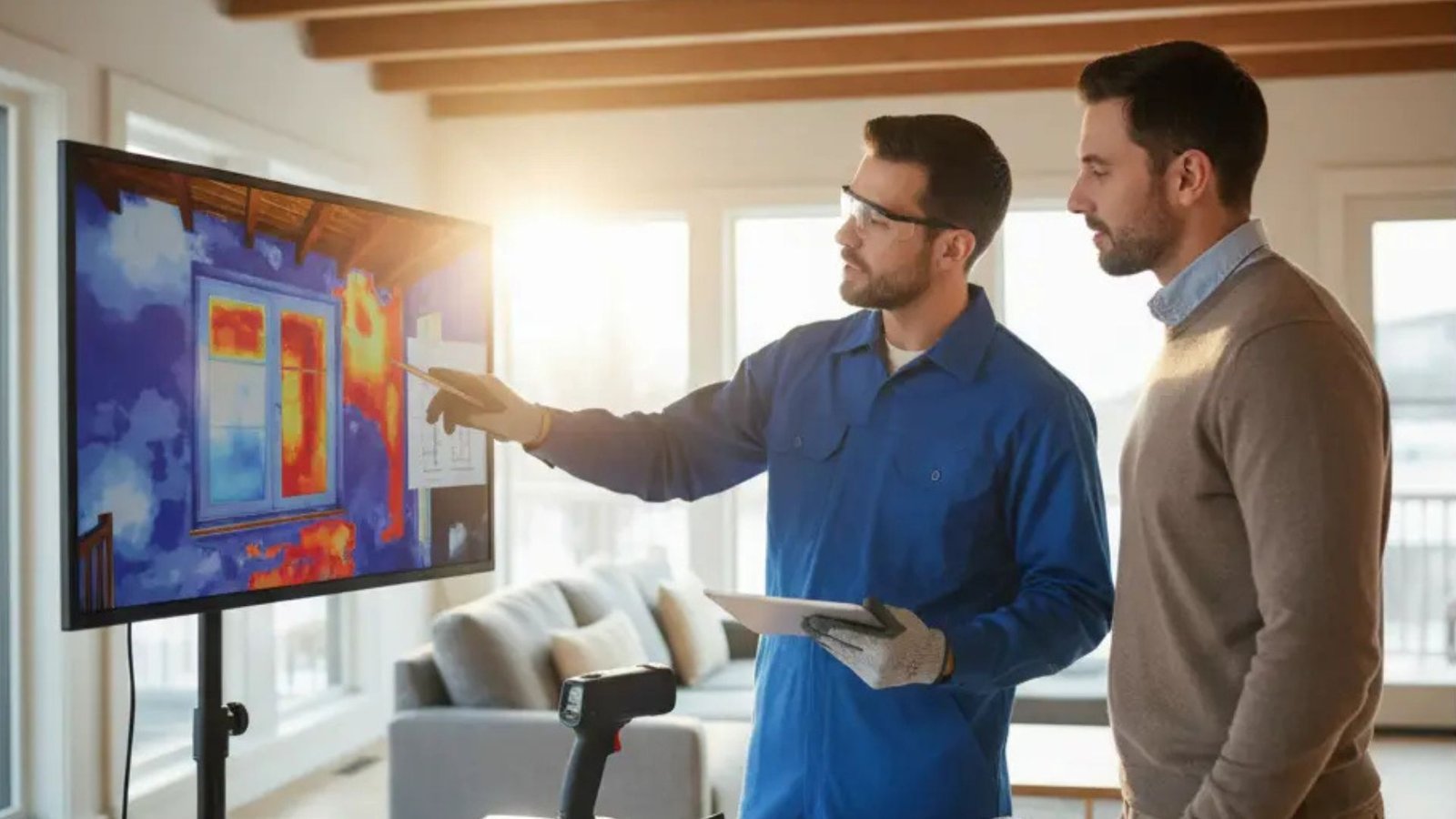
We deliver a comprehensive written report with annotated thermograms, problem descriptions, severity ratings, and specific repair recommendations, formatted for insurance claims, contractor quotes, or property disclosure.

Residential home thermal imaging inspection costs $200–$400 for a standard Chicagoland home. Commercial building inspections run $400–$1,400 or more depending on building size. Attic-only or crawl space scans cost $140–$300; electrical thermal imaging runs $200–$600; drone aerial thermal imaging costs $400–$1,400. Contact Qute Insulation for a free consultation and written quote.

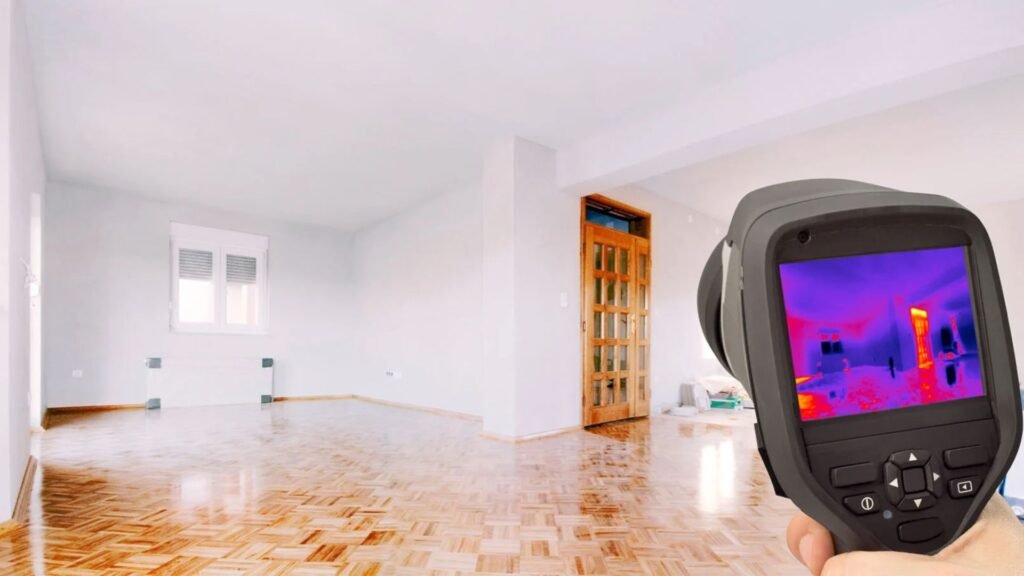
Thermal imaging inspection finds hidden problems that traditional visual home inspection physically cannot detect, including moisture behind walls, insulation gaps, and overheating electrical components invisible to the naked eye. Visual inspection identifies surface defects in accessible areas; thermal imaging reveals temperature anomalies indicating problems hidden behind walls, ceilings, and floors without any destructive testing.
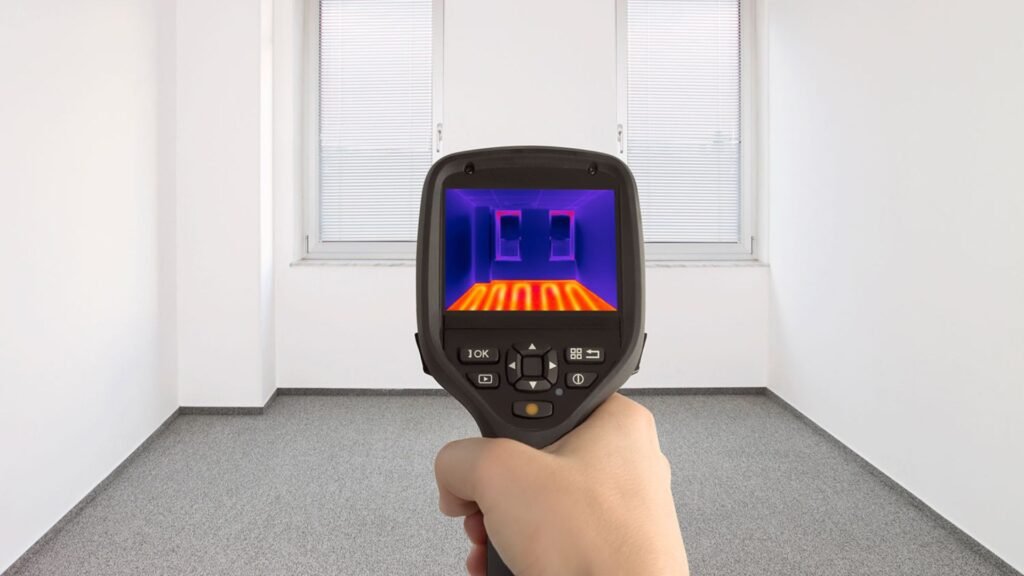
A DIY thermal camera can show temperature differences, but without IRT-certified thermographer training to interpret the results correctly, homeowners frequently misdiagnose thermal patterns, missing real problems or flagging false alarms. Professional FLIR cameras detect temperature differentials as small as 0.1°F versus 0.5–1.0°F for consumer tools, and every inspection includes a professional written report usable for insurance and legal purposes.
Our IRT-certified Level I and Level II thermographers bring hands-on experience with Chicagoland residential and commercial buildings. Licensed, insured, and trained to ASNT thermography standards on every inspection.
Qute Insulation uses professional-grade FLIR infrared cameras detecting temperature differentials as small as 0.1°F, far beyond the capability of any consumer-grade thermal imaging tool.
Written inspection quotes specify scope, areas covered, and deliverables before work begins. Free consultations available for Chicagoland and NW Indiana residential and commercial clients.
Our team understands Chicagoland's freeze-thaw building defects, lake-effect moisture patterns, older Chicago bungalow construction issues, and IECC Climate Zone 5 insulation and air sealing requirements.
Qute Insulation serves homeowners, property managers, commercial building owners, and contractors across Chicagoland and NW Indiana, providing standalone thermal imaging inspections and combined thermal inspections with insulation and air sealing services throughout the region. If you are searching for thermal imaging home inspection near me, our IRT-certified team is ready to help.
Flossmoor, IL | Homewood, IL | Park Forest, IL | Monee, IL | Joliet, IL | Chicago, IL | Naperville, IL | Aurora, IL | Elgin, IL | Schaumburg, IL | Orland Park, IL | Tinley Park, IL | Oak Lawn, IL | Berwyn, IL | Cicero, IL
Gary, IN | Crown Point, IN | Hammond, IN | East Chicago, IN | Whiting, IN | Griffith, IN | Highland, IN | Munster, IN | Dyer, IN | Schererville, IN | Merrillville, IN | Hobart, IN | Portage, IN | Valparaiso, IN | Lake Station, IN
Thermal imaging inspection is completely non-invasive and non-destructive, no drilling, no cutting, and no damage to walls, ceilings, or flooring. Family members, occupants, and pets can remain in the property during the entire inspection. All inspections are performed per ASTM E1934 thermal imaging standard for buildings and ASNT PT-TC-1A thermography protocol. Qute Insulation carries full professional liability and commercial general liability insurance.
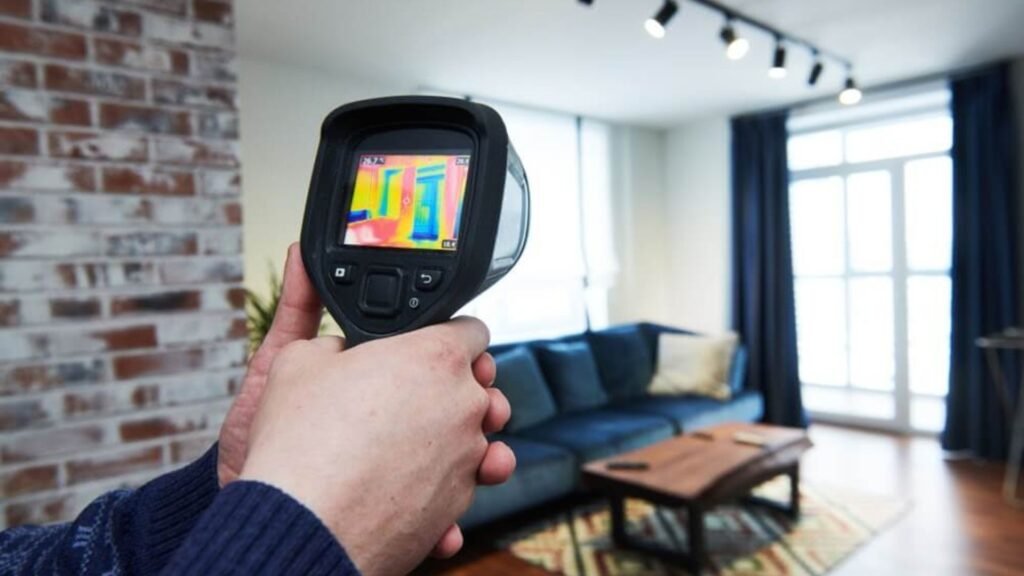
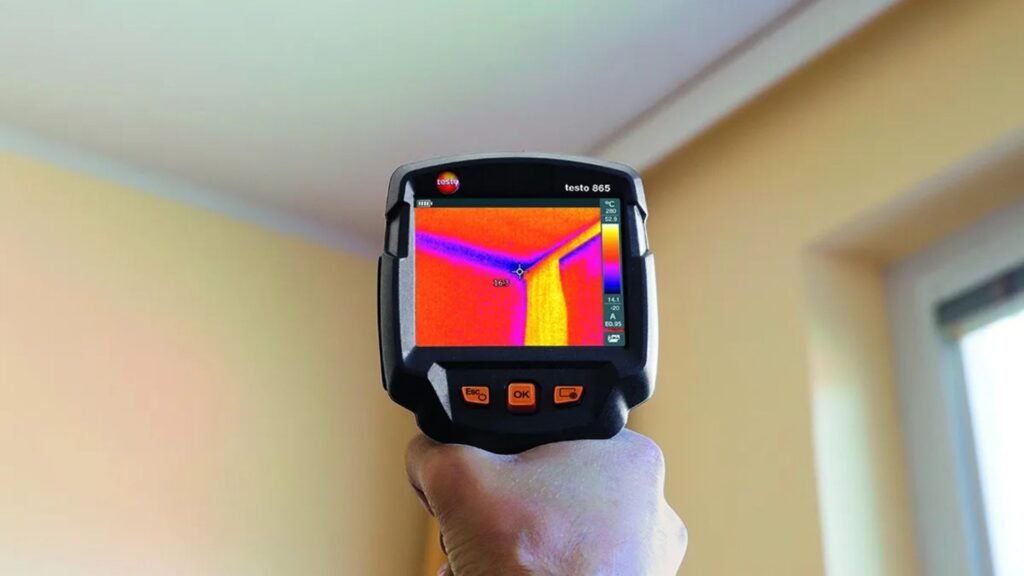
Every thermal imaging inspection delivers a detailed written report with annotated thermograms, problem area identification, severity classification, and specific action recommendations. Reports are formatted for insurance claim submission, contractor quotes, and real estate disclosure. For Chicagoland homeowners, annual thermal inspections after winter catch moisture and heat loss issues before they become expensive structural or mold remediation problems.
Thermal imaging inspection uses professional FLIR infrared cameras to detect temperature differentials across surfaces, revealing hidden heat loss, moisture, mold, insulation gaps, and electrical faults invisible to the naked eye. In Chicagoland, it is used for energy audits, mold detection, water damage location, electrical fault identification, and pre-insulation assessments.
FLIR infrared cameras detect infrared radiation emitted by surfaces, moisture, insulation gaps, and electrical faults, all of which create temperature differences appearing as distinct thermal anomalies on the camera display. An IRT-certified thermographer interprets these patterns to identify the specific hidden problem type, location, and severity without opening walls or flooring.
No, thermal cameras do not see through walls. They detect surface temperature differences caused by problems behind the wall, wet insulation, moisture-laden drywall, and mold growth all create cooler surface temperatures visible as thermal anomalies. Thermal imaging is most accurate with a temperature differential of at least 10°F between interior and exterior.
A standard visual home inspection identifies visible surface defects; thermal imaging finds hidden temperature anomalies revealing problems behind walls and ceilings that visual inspection cannot access. For Chicagoland homeowners and real estate professionals, combining both gives the most complete property assessment, especially in older buildings with moisture and insulation issues.
Residential thermal imaging inspection costs $200–$400 for a standard Chicagoland home; commercial inspections run $400–$1,400 or more depending on size; attic or crawl space scans cost $140–$300; electrical thermal imaging runs $200–$600; drone aerial thermal imaging costs $400–$1,400. Qute Insulation offers free consultations and written quotes before any inspection begins.
Qute Insulation provides commercial infrared inspections Illinois businesses rely on for warehouses, industrial facilities, and commercial buildings, primarily across the Chicagoland region. Call to confirm availability for locations further outside our core service map.
Yes, overheating electrical components generate heat appearing as bright hot spots on infrared cameras. Loose connections, failing circuit breakers, overloaded wiring, and faulty switchboards all produce identifiable electrical thermal anomalies. Electrical thermal imaging is a critical safety service for older Chicagoland commercial buildings and any property with aging electrical systems.
Mold growth requires moisture, areas with hidden moisture behind walls appear as cooler thermal anomalies due to evaporative cooling. In Chicago’s freeze-thaw climate, moisture intrudes into older bungalow walls after winter events; thermal imaging detects these wet areas before visible mold appears, allowing early remediation before costly structural damage occurs.
Chillicothe, IL, and Indianapolis fall outside our standard Chicagoland and NW Indiana service map. Call our team to confirm availability and scheduling for certified thermal imaging inspections in these areas, as service to outlying locations is evaluated on a case-by-case basis.
Search for an IRT-certified thermographer using professional FLIR equipment rather than a consumer-grade camera. Qute Insulation offers thermal imaging home inspection near me coverage across Chicagoland and NW Indiana, including Chicago, IL and Naperville, IL, with free consultations before any inspection begins.
Hidden heat loss, mold, moisture, and electrical faults in Chicagoland buildings do not fix themselves, and every winter they get worse. Qute Insulation brings IRT-certified thermographers, professional-grade FLIR equipment, and transparent written reports to Gary, Crown Point, Flossmoor, Homewood, Park Forest, Monee, and Joliet. Call 1-708-808-7870 for your free thermal imaging consultation today, don’t let hidden problems go undetected another Chicagoland winter.