
Crawl space encapsulation services seal a crawl space with a reinforced polyethylene vapor barrier to block ground moisture and outside humid air permanently. The system converts a traditional vented crawl space into a sealed, conditioned space. Qute Insulation provides crawl space Chicago homeowners trust, serving homes and commercial buildings across the Chicago metro area and Northwest Indiana, including Elk Grove Village, Des Plaines, and Mount Prospect
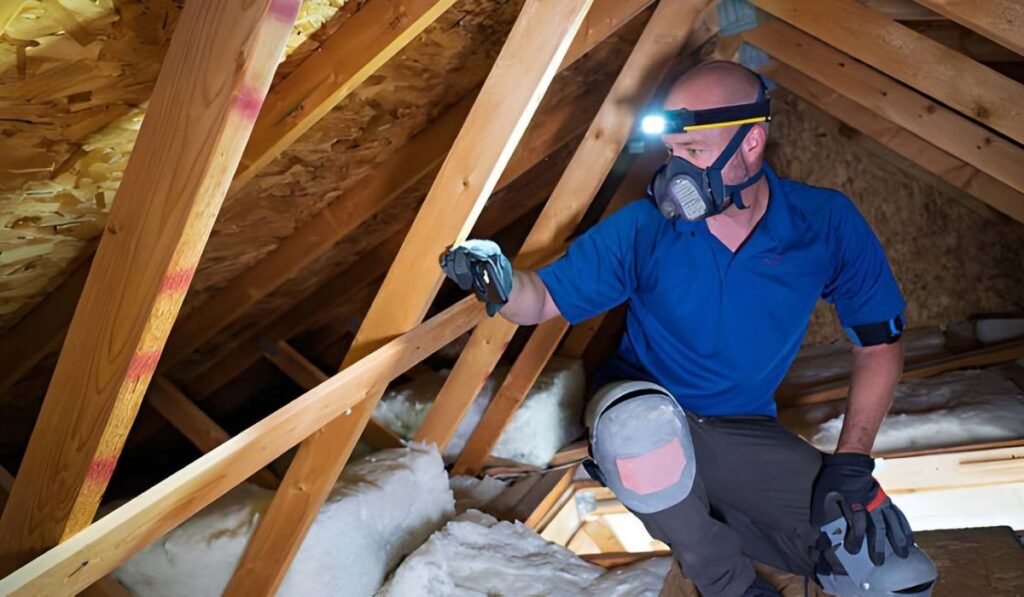
Crawl space encapsulation is the process of sealing a crawl space floor and walls with a reinforced polyethylene vapor barrier, typically 12 to 20 mil thick, to block ground moisture and outside air from entering the space. This converts a traditional vented crawl space into an unvented, conditioned space recognized under IRC section R408.3. Qute Insulation provides professional crawl space encapsulation services for homes and commercial buildings across the Chicago metro area and Northwest Indiana communities including Gary, Crown Point, and Joliet.
Department of Energy building science research identifies vented crawl spaces as a leading source of moisture, mold, and energy loss in humid climates. Roughly 40 percent of the air on a home’s first floor can originate from the crawl space below through the stack effect. Clay-heavy soil common across Gary and Crown Point intensifies this moisture migration significantly.
A sealed vapor barrier blocks ground moisture migration that causes wood rot in floor joists and structural decay over time. EPA and building science research link uncontrolled crawl space moisture directly to mold growth and long-term structural damage.
Roughly 40 percent of the air circulating on a home's first floor can originate in the crawl space due to the stack effect. Sealing the space stops humid, musty, or mold-affected air from migrating upward into living areas.
Musty crawl space odor is caused by microbial growth feeding on sustained ground moisture, not by the dirt floor itself. Sealing foundation vents and floor gaps during encapsulation also closes the entry points pests use to access the space.
An unsealed, uninsulated crawl space allows conditioned air to escape and outside air to infiltrate, increasing heating and cooling costs year-round. Documented encapsulation with a warranty is frequently cited by real estate professionals as a value-protecting improvement during a home sale.
Posted on Google
 Terry Browne
Trustindex verifies that the original source of the review is Google.
I Received A Great Quote, & Derrick Is Very Professional,He Explained Everything In Detail, He Gets An A +++ 🙏Posted on Google Rod SpencerExcellent work and very professional. Blew installation into my split-level inside wall. Performed the job from the top level of the inside wall and the bottom. I highly recommend this company. 5 Stars *****Posted on Google
 Billy BurseGreat folks and great workPosted on Google
 Ellie CastilloI processed my request online and Derrick contacted me within minutes to schedule an in person quote he matched price and schedule the same week my work. Very responsible, professional and everything was done within hours they left my house cleaned and very happy with their job !!! 100% recommended!!Posted on Google
 Mark MaysAttic installation was done well and price was reasonable.Posted on Google
 Christine ZylstraAfter removing my attic insulation completely, cleaning and disinfecting, the team of professionals installed the new insulation in record time. They were very professional and thorough. I can feel the difference in one day. They were polite, helpful and cleaned up completely when the job was finished. I highly recommend this company.
A full vapor barrier and sealing system is installed across combined basement and crawl space areas common in older Chicagoland homes, treating both zones as one conditioned system.
Heavy-duty 12 to 20 mil reinforced vapor barrier liners are installed on crawl space floors and walls with sealed seams to block ground moisture in NW Indiana homes.
Mold remediation is completed first, followed by full encapsulation, since sealing over active mold without treatment allows the contamination to continue spreading beneath the vapor barrier.
Rigid foam wall insulation is paired with the vapor barrier system for maximum thermal performance, reducing energy loss through the foundation walls across Chicago homes.
A dedicated crawl space dehumidifier is installed within the sealed space to maintain relative humidity below 55 percent year-round, the threshold building science research identifies for preventing mold regrowth.
Interior drainage channels and a sump pump system are added to manage standing water and rising water tables before the vapor barrier is installed in NW Indiana properties.
Foundation vents are mechanically sealed and air leaks at the sill plate and foundation are closed, converting the space from vented to unvented per IRC R408.3 guidelines.
Large-scale encapsulation systems are engineered for commercial buildings and multi-unit properties throughout Chicagoland, scaled for square footage, drainage volume, and dehumidification capacity specific to the property.
Every encapsulation project follows the same five-step process from inspection to final verification.

A technician inspects the crawl space for standing water, soil moisture levels, existing mold, structural wood condition, and vent placement before determining the encapsulation and drainage plan.
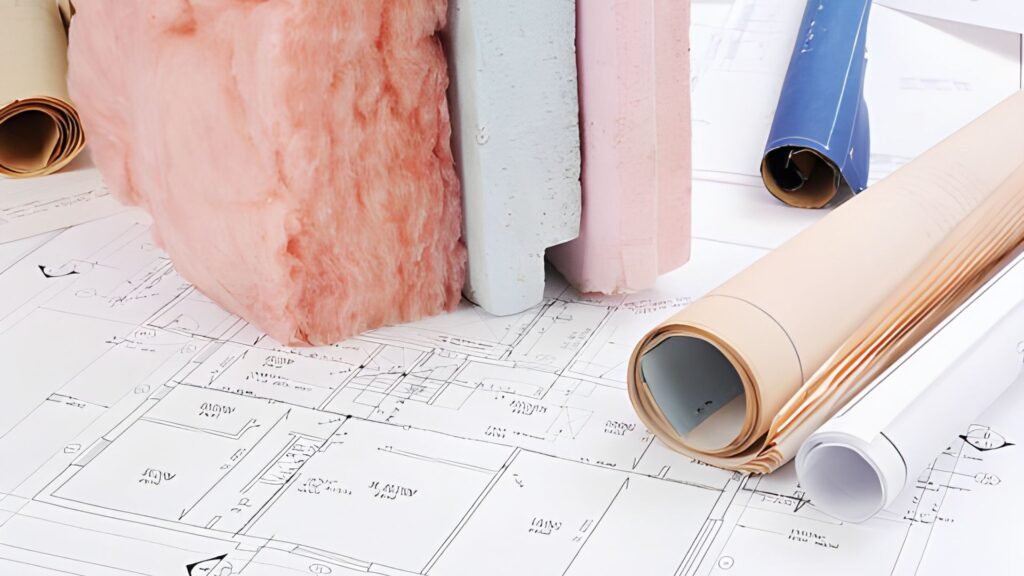
Existing debris, mold-affected material, and pest contamination are removed and treated, since the vapor barrier must be installed over a clean, dry, decontaminated surface.

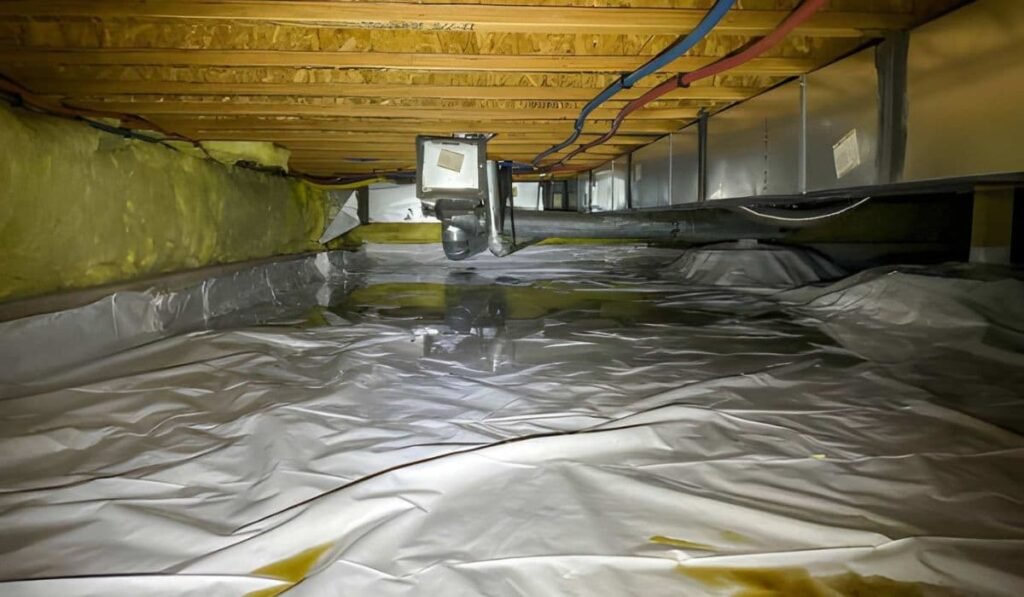
A reinforced 12 to 20 mil polyethylene vapor barrier is installed across the floor and mechanically fastened up the foundation walls, with all seams sealed using encapsulation-grade tape.
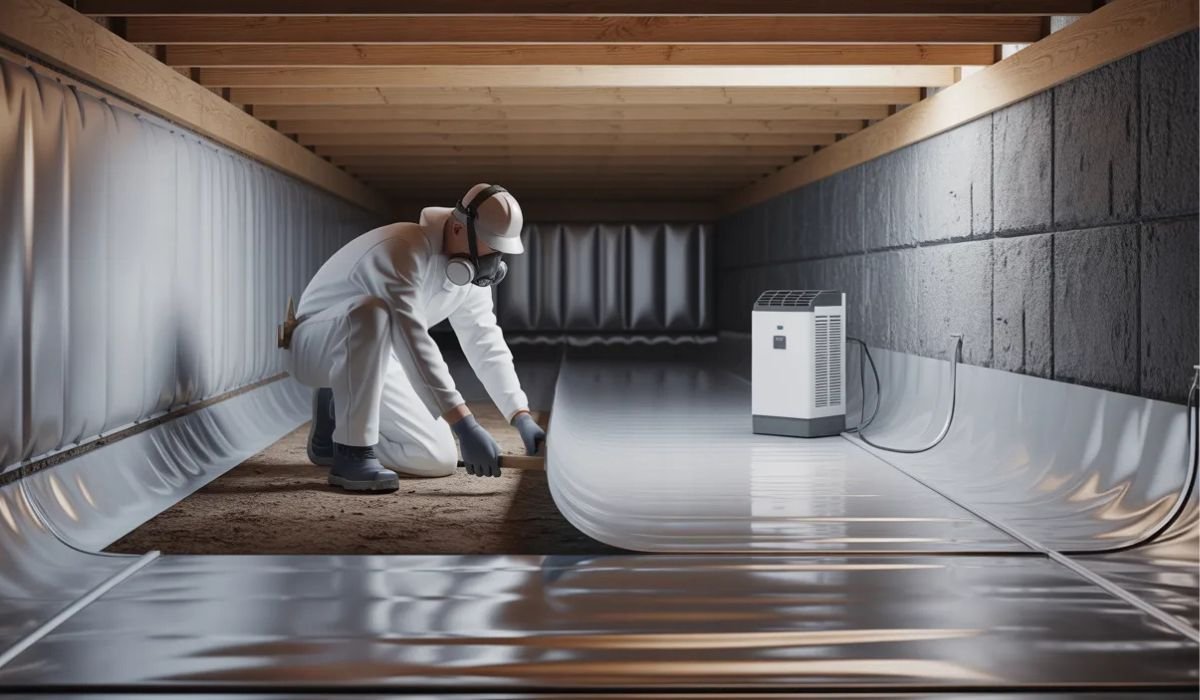
Foundation vents and air leaks are sealed, rigid foam wall insulation is installed where specified, and a dehumidifier is placed to maintain target relative humidity inside the sealed space.

The completed system is inspected for seam integrity, drainage function, and humidity levels, with a written summary of the work performed and ongoing maintenance recommendations provided.
Professional crawl space encapsulation typically costs $5 to $13 per square foot in the Chicago metro area, with a standard 1,000 to 1,500 square foot crawl space project ranging from $5,000 to $15,000 depending on drainage, insulation, and dehumidification needs. Mold remediation or sump pump integration adds to the base cost. Qute Insulation provides free inspections and written estimates before any work begins.

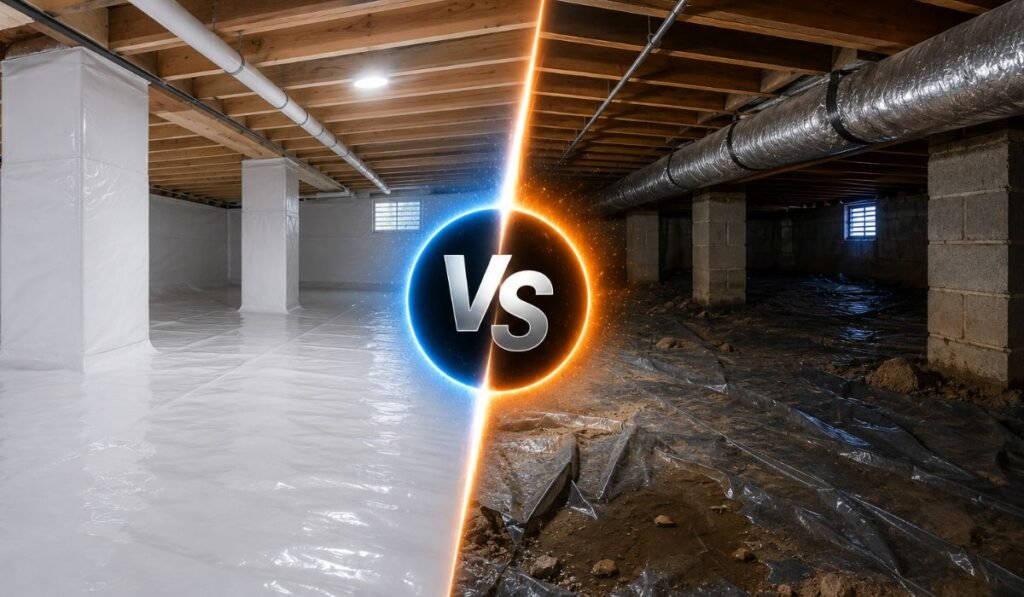
A basic vapor barrier covers only the crawl space floor and does not seal foundation vents, wall gaps, or air leaks, leaving the space still vented to humid outside air. Full encapsulation seals floor, walls, and vents together, converting the space into a conditioned system per IRC R408.3. A floor-only vapor barrier reduces ground moisture but does not stop humid outside air from entering through unsealed vents in Joliet or Crown Point homes; full encapsulation addresses both moisture sources at once.
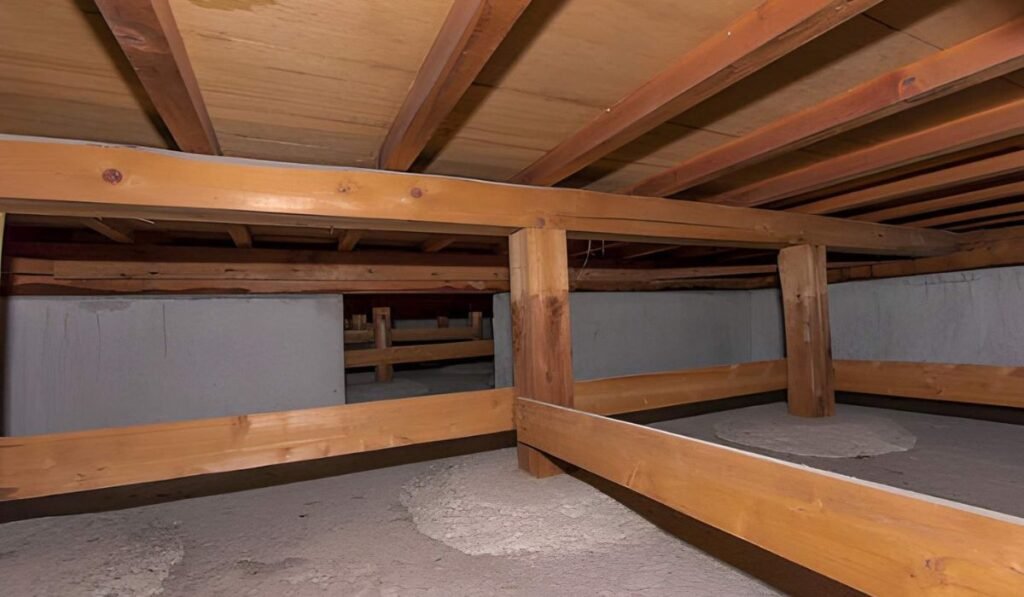
A general contractor can lay plastic sheeting on a crawl space floor, but a trained encapsulation specialist designs a complete moisture control system including drainage and humidity management for Flossmoor and Homewood homes. This is the key difference between hiring crawl space encapsulation contractors and a dedicated specialist team
Qute Insulation technicians are trained in building-science-based encapsulation methods, covering vapor-barrier installation, drainage, and dehumidification across residential and commercial properties. Licensed and insured.
Qute Insulation uses reinforced 12 to 20 mil polyethylene vapor barriers, encapsulation-grade seam tape, and commercial-grade dehumidification equipment rated for the specific crawl space size and moisture level.
Written quotes specifying square footage, materials, drainage scope, and total cost are provided before any work begins. Free inspections available across all service areas.
We specialize in older Chicago buildings and NW Indiana properties. Homeowners trust us as one of the top crawl space encapsulation companies near me searches return
Qute Insulation provides crawl space encapsulation services across the listed cities for both residential and commercial properties, serving full encapsulation projects and standalone drainage or dehumidification upgrades alike.
Flossmoor, IL | Homewood, IL | Park Forest, IL | Monee, IL | Joliet, IL | Chicago, IL | Naperville, IL | Aurora, IL | Elgin, IL | Schaumburg, IL | Orland Park, IL | Tinley Park, IL | Oak Lawn, IL | Berwyn, IL | Cicero, IL
Gary, IN | Crown Point, IN | Hammond, IN | East Chicago, IN | Whiting, IN | Griffith, IN | Highland, IN | Munster, IN | Dyer, IN | Schererville, IN | Merrillville, IN | Hobart, IN | Portage, IN | Valparaiso, IN | Lake Station, IN
Crawl space work involves confined-space entry, and technicians follow OSHA confined-space guidelines for ventilation, lighting, and access throughout the project. Full PPE, including respiratory protection, is worn when mold or pest contamination is present. All vapor barrier and sealant materials meet manufacturer specifications for crawl space conditions.
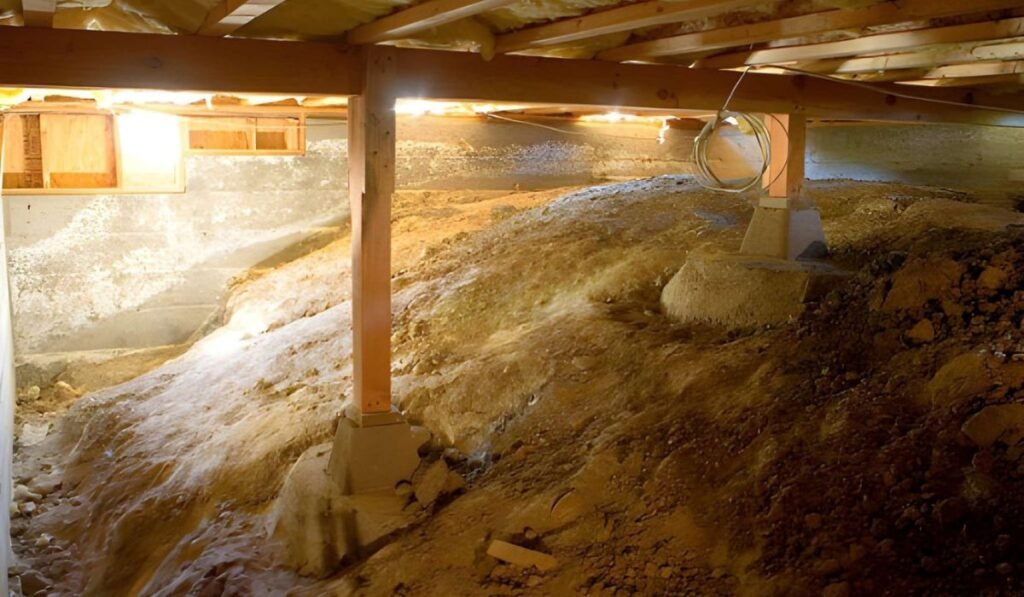
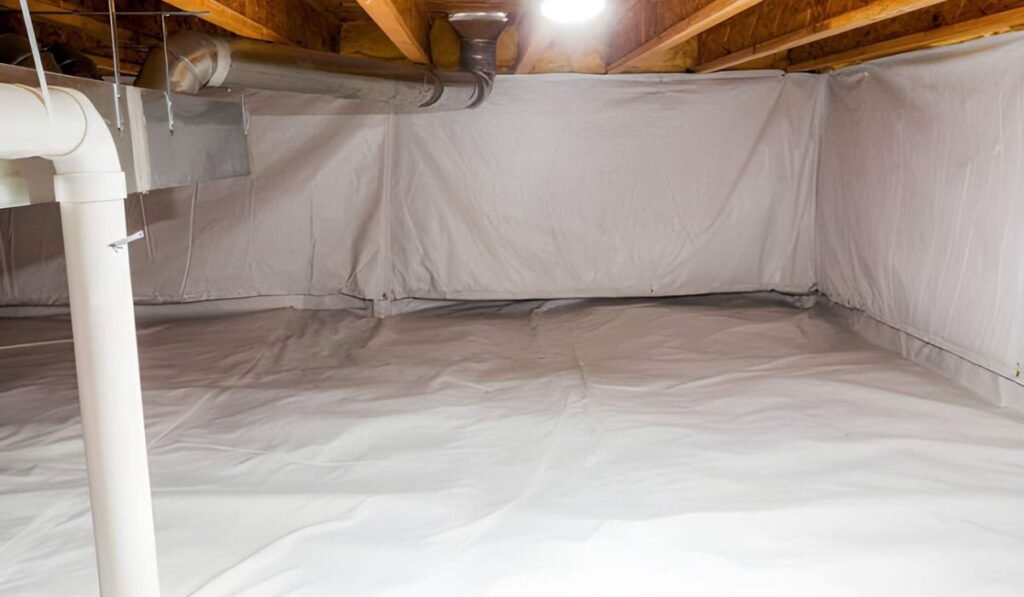
An encapsulated crawl space requires checking the dehumidifier filter and drainage sump pit twice yearly to maintain proper function. Qute Insulation recommends keeping relative humidity below 55 percent inside the sealed space, the threshold building science research identifies for preventing mold regrowth over the long term.
Untreated crawl space moisture causes worsening wood rot, mold growth, and energy loss the longer it goes unaddressed, especially before winter freeze-thaw cycles. Qute Insulation brings building science-trained specialists, reinforced vapor barrier and dehumidification systems, and transparent pricing with free inspections to Gary, Crown Point, Flossmoor, Homewood, Park Forest, Monee, and Joliet. Call [1-708-808-7870] today. A damp crawl space does not fix itself.
Crawl space encapsulation is the process of sealing a crawl space floor and walls with a reinforced polyethylene vapor barrier to block ground moisture and outside air. An encapsulated crawl space is the resulting sealed, conditioned space recognized under IRC section R408.3 as an alternative to traditional vented construction.
Professional crawl space encapsulation typically costs $5 to $13 per square foot in the Chicago metro area. A standard 1,000 to 1,500 square foot crawl space project ranges from $5,000 to $15,000, with drainage or dehumidification needs adding to the base cost.
The average cost per square foot for professional crawl space encapsulation in the Chicago metro area falls between $5 and $13, depending on vapor barrier thickness, drainage integration, and dehumidification equipment included in the project scope.
Encapsulation prevents wood rot and mold by blocking ground moisture, improves indoor air quality since roughly 40 percent of first-floor air can originate in the crawl space, eliminates musty odors and pest entry points, and increases energy efficiency throughout the home.
Yes, encapsulation is particularly valuable for older homes built before 1990 with traditional vented crawl space construction, since this design is identified by Department of Energy research as a leading cause of moisture, mold, and energy loss in humid climates like NW Indiana.
The main benefits are moisture control, improved air quality, energy savings, and pest prevention, while the primary downside is upfront cost, typically $5,000 to $15,000 for a standard project. Most homeowners recoup this investment through energy savings and avoided structural repair costs over time.
Yes, documented encapsulation with a warranty is frequently cited by real estate professionals in Cook County and Lake County, Indiana, as a value-protecting improvement, since it resolves moisture and structural concerns that commonly arise during home inspections and sale negotiations.
Look for crawl space encapsulation companies with building science-trained technicians, reinforced 12 to 20 mil vapor barrier materials, and drainage or dehumidification integration rather than basic plastic sheeting. Qute Insulation provides free inspections for homeowners across Gary, Crown Point, and the wider service area.
Crawl space encapsulation companies and contractors are often used interchangeably, but the best choice is one with dedicated building science training rather than a general contractor offering encapsulation as a side service. This distinction affects drainage design, humidity control, and long-term moisture performance.
Qute Insulation has responded to crawlspace encapsulation Palatine and crawlspace encapsulation Wilmette requests, though these sit outside our standard listed communities. Call our team to confirm availability and scheduling for North Shore and northwest suburb locations.
Search for crawl space encapsulation near me results showing building science training and reinforced vapor barrier materials, not just basic plastic sheeting installers. Qute Insulation covers the full Chicagoland and NW Indiana region with free on-site inspections.