
Most contractors drive into Cook County for work. We wake up in it. Qute Insulation is headquartered in Lynwood, inside the county’s south suburbs, which means the crews insulating your attic live and work in the same communities you do. Attic insulation, spray foam, air sealing, insulation removal, and crawl space encapsulation all come from one local team that has worked these towns for more than 15 years.
Our focus is the south suburban side of Cook County, the belt of communities from the Indiana state line west through Tinley Park. Every project starts with a free thermal inspection and a written, itemized quote, wherever in the county your home sits.
Whether you’re dealing with high energy bills, uneven room temperatures, or unwanted noise, we’re here to help. Reach out today for a free home energy consultation, or get answers from one of our experts with 15+ years of experience in attic, crawlspace, spray foam, air sealing, and whole-home energy efficiency.
The south suburbs of Cook County hold more than a century of housing side by side. Railroad-era estates in Flossmoor, brick bungalows in Lansing and Calumet City, a planned GI town in Park Forest, postwar split-levels in Homewood, and boom-era subdivisions in Tinley Park all share the same Climate Zone 5 winters, and almost none of them were built to today’s insulation standards.
ENERGY STAR reports that sealing air leaks and adding insulation can cut heating and cooling costs by about 15%, and across Cook County, IL our thermal inspections keep finding the same five escape routes:
The oldest housing in south Cook County was built before wall insulation existed. Lansing’s brick bungalows, Calumet City’s West Hammond-era two-flats, and Flossmoor’s architect-designed early-1900s homes all typically hide empty wall cavities behind solid masonry and plaster. Dense-pack insulation fills those walls through small, patched openings, transforming comfort while the brick, plaster, and period character stay untouched.
After the war, the south suburbs exploded. Park Forest was planned from scratch in 1948 for returning GIs, Homewood filled with 1950s and 1960s split-levels, and Glenwood added its ranch subdivisions through the 1960s. These homes were insulated to the thin standards of their day, so their attics now measure a third of the modern target and their knee walls and rim joists leak steadily.
Tinley Park alone added more than 11,000 housing units between 1970 and 1994, and Lynwood keeps building new subdivisions today. Even the newest of these homes met only the minimum code of their build year, which usually means R-30 to R-38 attics and cold rooms over garages. Topping those attics toward R-60 and sealing the weak points locks in the efficiency these homes were supposed to have.
Our full lineup covers 23 insulation and energy services, and every one of them is available throughout our Cook County service area. Here is the work south suburban homeowners call us for most, grouped the way real projects actually run.

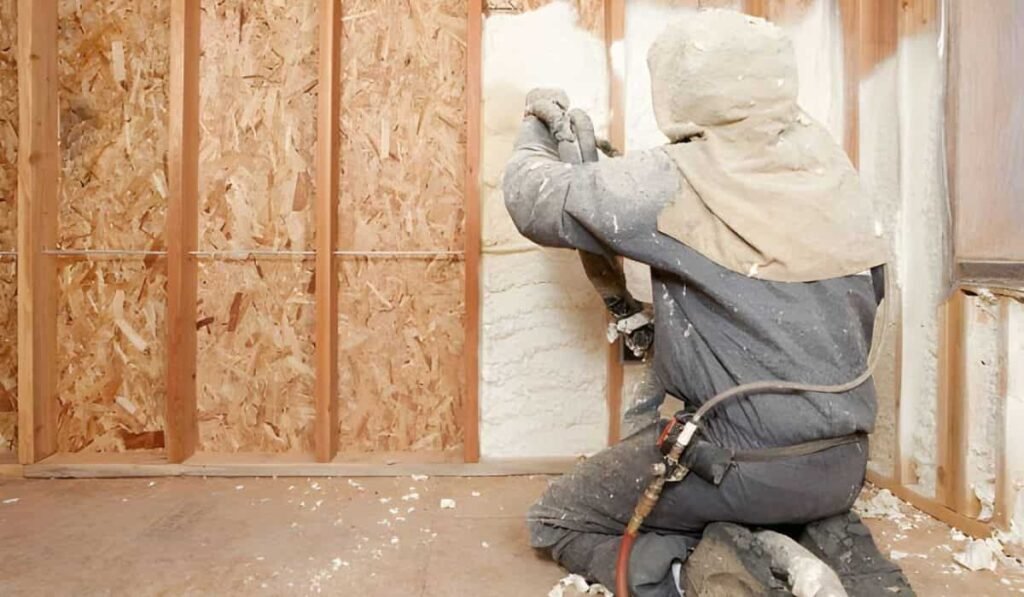
Closed-cell foam blocks moisture and cold together in Cook County’s damp basements and rim joists, while open-cell foam fills walls and quiets rooms. One application does the sealing and insulating that older south suburban homes never received.
The empty walls hiding behind Cook County’s prewar bungalows, two-flats, and Flossmoor-era estates fill completely with dense-pack cellulose. It enters through small patched openings, so the brick, plaster, and period trim stay exactly as built.

Before insulation goes in, our crews close the rim joists, attic bypasses, and hidden chases that let heated air escape Cook County homes. A blower door test afterward proves the house tightened, with numbers instead of promises.

From Lansing bungalow attics to Tinley Park two-stories, fiberglass delivers dependable coverage at the friendliest price in Cook County. We install fire-rated, formaldehyde-free batts or blown-in material, and most attics finish within one working day.

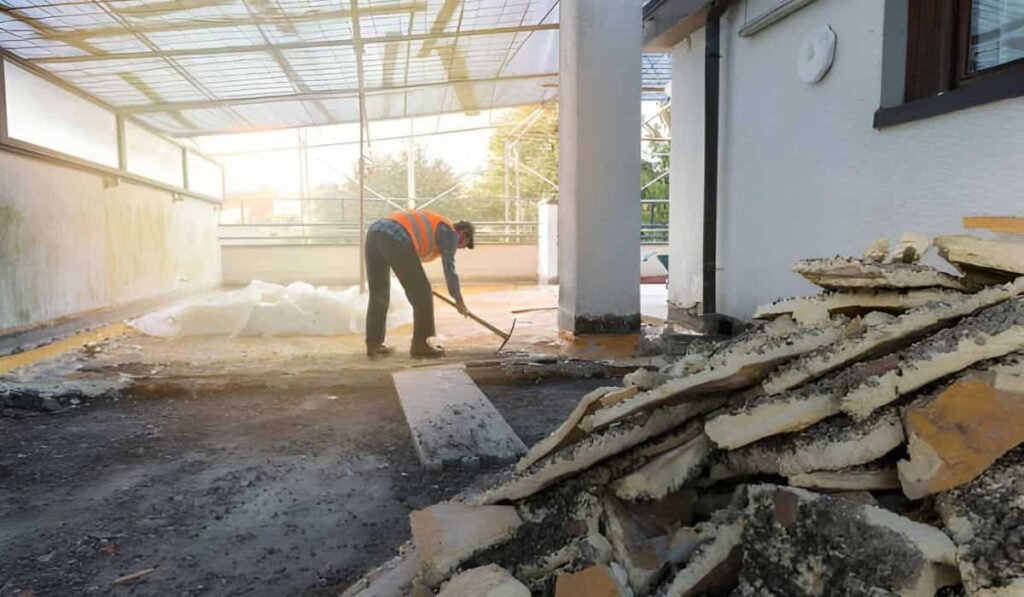
Old, damaged, or pest-fouled insulation leaves Cook County attics and crawl spaces through sealed HEPA vacuum systems that keep dust out of your rooms. The cleared space is sanitized and deodorized, ready for fresh material.

Cook County homeowners qualify for Nicor Gas and ComEd insulation rebates, including up to $500 for air sealing, but the paperwork stops many from collecting. We file every application, so the discount lands on your invoice.

The clay and lake-plain ground under Cook County’s south suburbs pushes moisture at foundations year-round. A fully sealed vapor barrier across the crawl space floor and walls ends the musty air, mold risk, and cold floors above.

Illinois deep freezes hunt exposed pipes in Cook County attics, basements, and crawl spaces every January. Foam and fiberglass wrap stops burst-pipe emergencies and keeps hot water hot on its run from the tank to your tap.

Shared two-flat walls, Metra lines, and expressway corridors give Cook County homes plenty to hear. Dense acoustic insulation in walls, floors, and ceilings brings real quiet to bedrooms, home offices, and finished basements across the county.

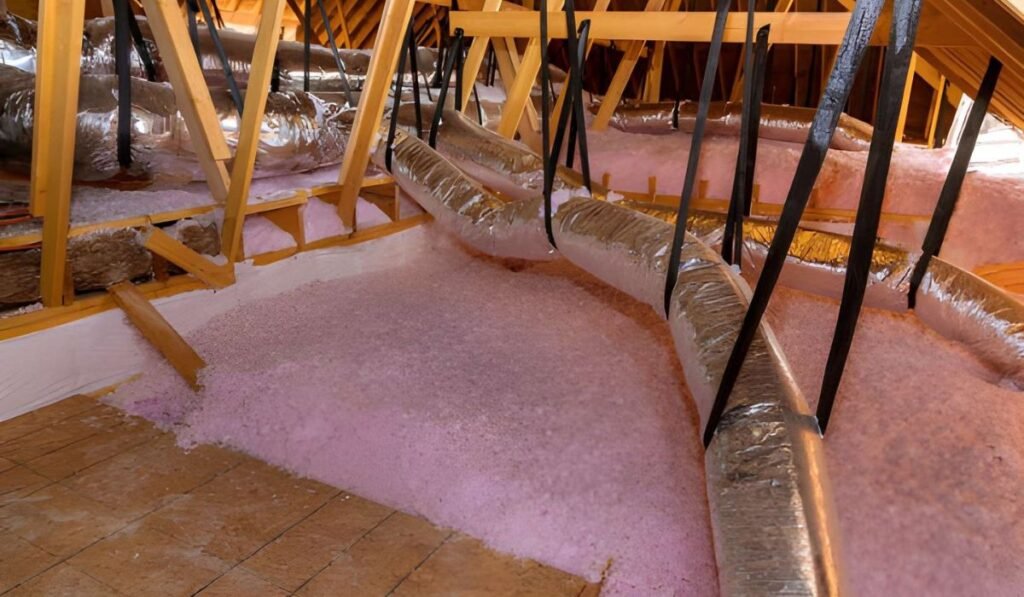
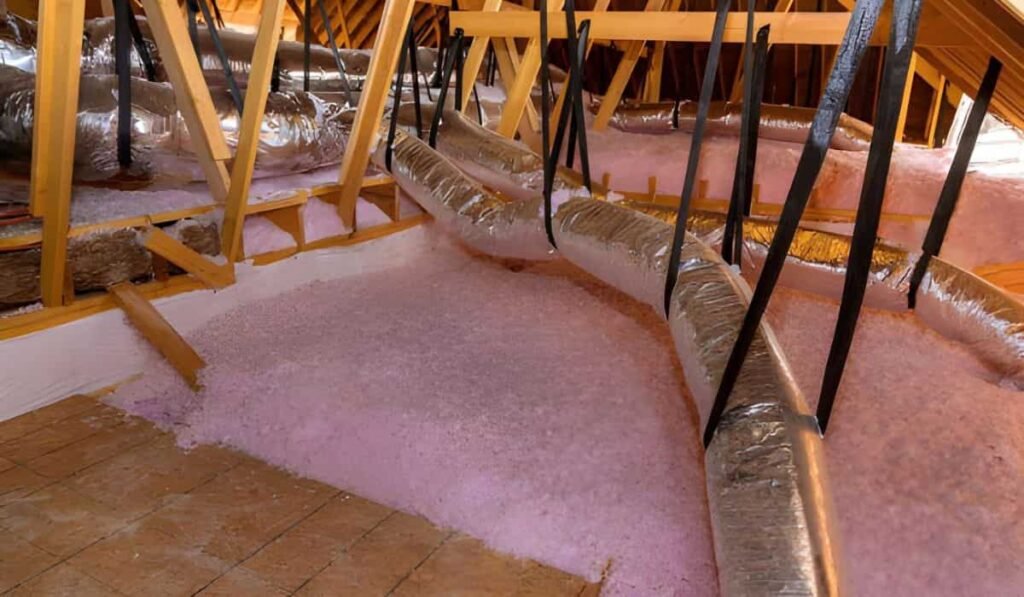
Most Cook County attics still hold their original R-11 to R-19, a third of today’s target. Topping them to R-49 to R-60 is the fastest payback upgrade any home in the county can buy.
Insulation in Cook County, IL typically costs $1.00 to $4.00 per installed square foot, with the material and the part of the house setting the price. A two-flat wall job in Calumet City and a split-level attic in Homewood are different projects, which is why every quote follows a real inspection rather than a phone estimate.
Blown-in attic insulation anchors the affordable end at typically $1.50 to $3.50 per square foot, and it is the first upgrade most south suburban homes need. Closed-cell spray foam holds the top of the range at roughly $2.00 to $4.00, earning that price in damp crawl spaces and rim joists. Removing old or contaminated material typically runs $1.00 to $2.00 per square foot.
Most Cook County homeowners recover the project cost through energy savings within three to seven years, and utility rebates shorten that payback further. Every quote we write is free, itemized line by line, and based on your home’s actual measurements.
All of Cook County sits in Climate Zone 5, where the U.S. Department of Energy sets the attic target at R-49 to R-60. The county’s prewar homes often have bare walls, its postwar housing typically measures R-11 to R-19 in the attic, and even newer subdivisions usually stop near R-38. The distance between those readings and the targets below is where heating budgets disappear every Illinois winter.
Area of Home | DOE Recommended R-Value (Zone 5) |
Attic/ceiling | R-49 to R-60 |
Walls (wood frame) | R-13 to R-21 |
Floors | R-25 to R-30 |
Crawl space walls | R-15 to R-19 |
Basement walls | R-15 to R-19 |
Your free inspection includes measuring what the house actually holds right now, attic, walls, and crawl space included. The recommendation that follows fits your specific home and budget, not a generic chart.
Cook County homeowners have four savings paths in 2026: Nicor Gas and ComEd Home Energy Savings rebates, free weatherization through the Illinois Home Weatherization Assistance Program for income-qualified households, a county property tax exemption that can shelter home improvements, and nothing federal, since the 25C tax credit expired on December 31, 2025.
The joint Home Energy Savings Program discounts qualifying attic and wall insulation directly on your invoice, and air sealing earns up to $500 per household. Two conditions apply: the installer must be program-approved, and blower door tests plus attic photos are required before and after the work.
Each year’s funding is limited across the whole service territory, so Cook County homeowners who book early in the season collect the most.

The Illinois Home Weatherization Assistance Program delivers insulation, air sealing, and HVAC work at no cost for households at or below 200% of the federal poverty line. Enrollment runs through local community action agencies serving south suburban Cook County, and we can point you to the right one for your town.
Cook County adds a savings angle no utility offers. The Home Improvement Exemption, administered by the Cook County Assessor’s Office, lets owner-occupied homes of up to six units make improvements without being taxed on up to $75,000 of the added value for up to four years. The Assessor applies it automatically after field-checking the building permit, then mails the owner a confirmation notice.
Insulation installed as part of a permitted improvement project can fall under this protection, so a larger renovation that includes insulation work may raise your comfort without raising your assessment. Confirm your specific project’s eligibility with the Assessor’s Office, and we will provide the documentation your permit file needs.
The federal 25C Energy Efficient Home Improvement Credit expired on December 31, 2025, ended early by the One Big Beautiful Bill Act, and IRS Fact Sheet 2025-05 confirms that insulation installed in 2026 earns no federal credit. The utility, state, and county programs above are the real savings path this year.
One exception survives: Cook County projects completed and placed in service by December 31, 2025 can still be claimed on the 2025 tax return using IRS Form 5695.
Our service area centers on the south suburban side of Cook County, the towns our crews can reach quickly from the Lynwood headquarters. As a trusted local insulation contractor based in Cook County, Qute Insulation proudly extends its services across the entire Chicagoland area.
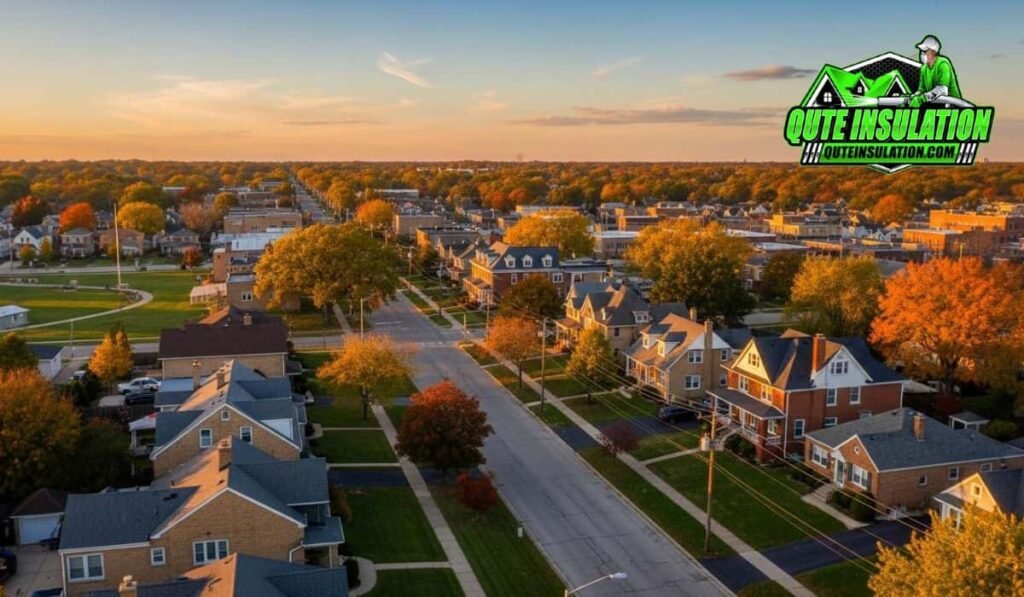
Lynwood is home base, the village where our headquarters sits on Torrence Avenue. Its post-1970 ranches, split-levels, and fast-growing new subdivisions around Lake Lynwood and Lynwood Terrace get same-day attention because reaching them takes minutes, not a drive.
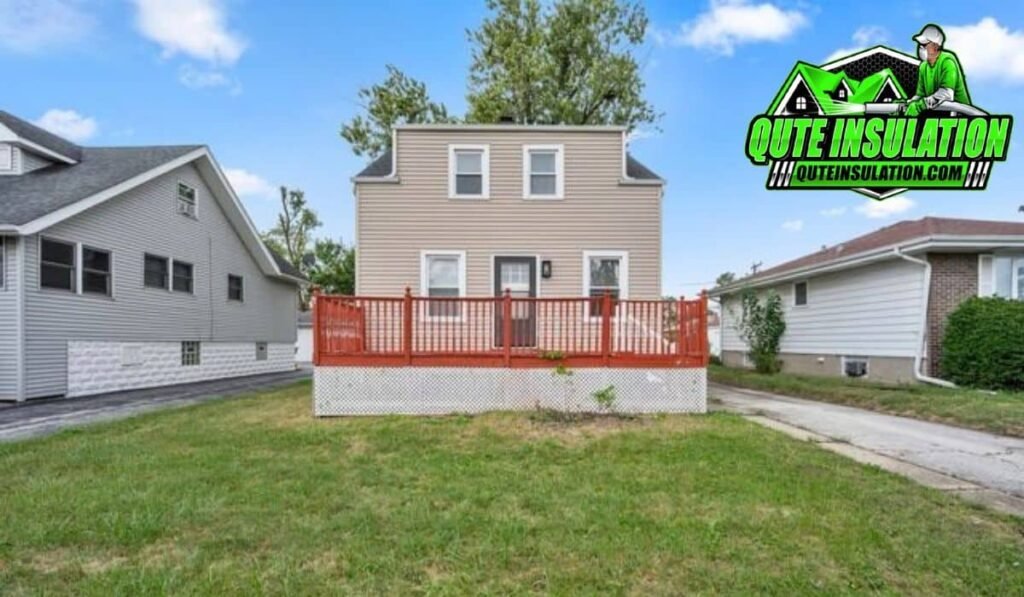
About 7 minutes (3 miles) north, Lansing’s brick bungalows hide hollow walls behind solid masonry, and its century homes near Ridge Road sit on the ancient lake shoreline. Dense-pack walls, attic top-ups, and soundproofing near Lansing Municipal Airport are our regular work here.
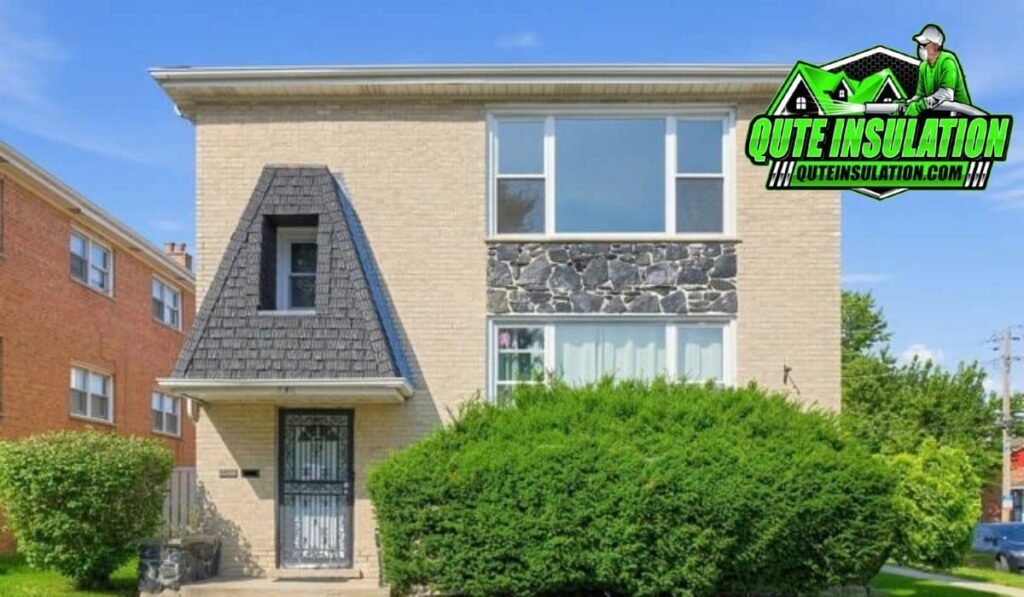
Roughly 12 minutes (6 miles) up Torrence Avenue, Calumet City packs bungalows and two-flats from its West Hammond years onto compact blocks near the state line. Two-flat insulation, dense-pack walls, and damp basement fixes on the low Calumet ground lead the call sheet.
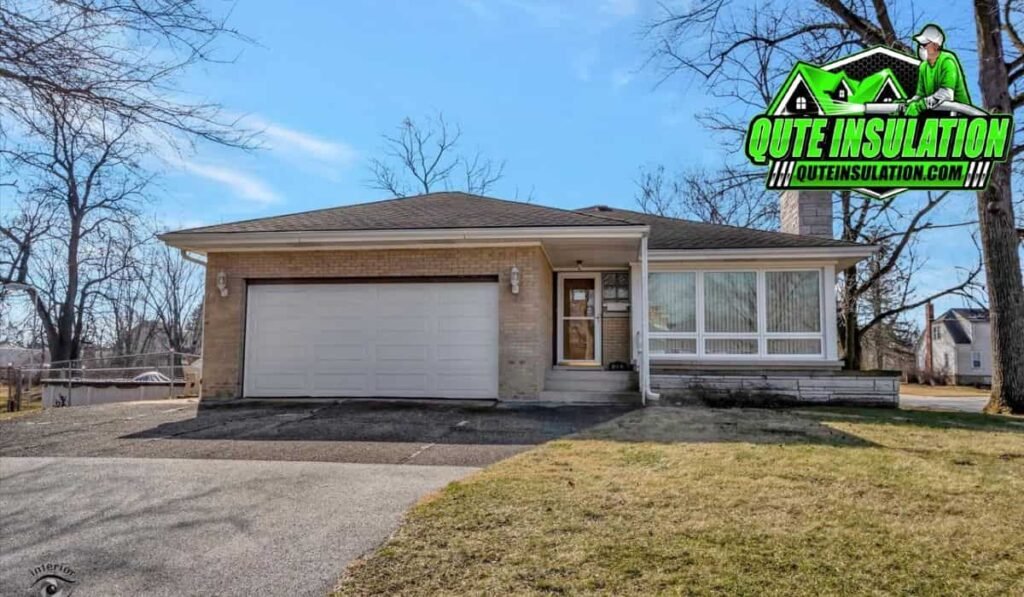
About 10 minutes (5 miles) west, Glenwood sits wrapped in forest preserves, which keeps it beautiful and keeps squirrels in its attics. Its 1960s ranches in Glenwood Estates need attic depth, and the damp ground near North Creek makes crawl space encapsulation a local staple.
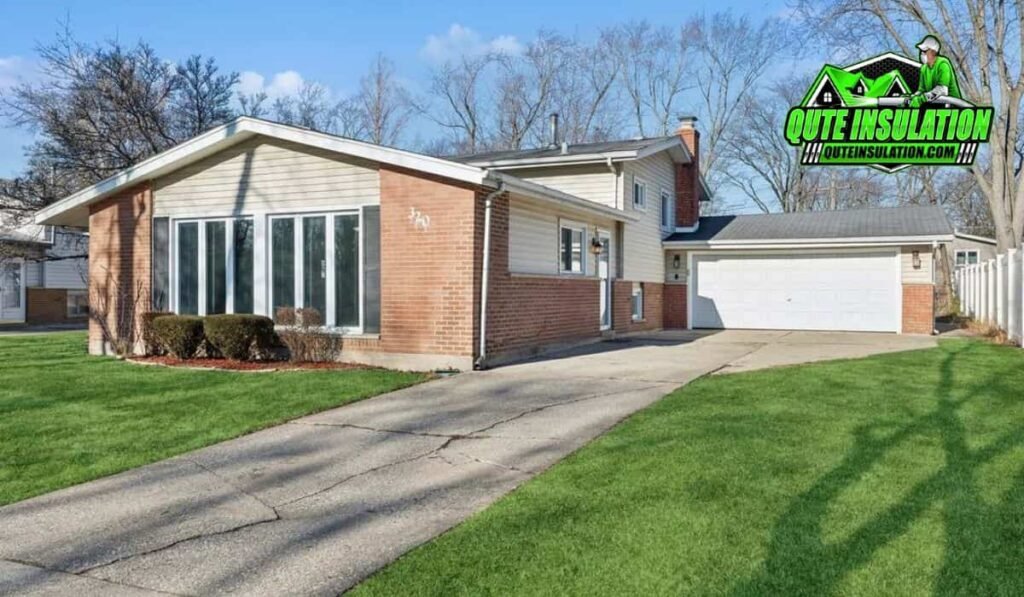
Beside Homewood, about 15 minutes (8 miles) from our base, Flossmoor’s architect-designed early-1900s homes in Old Flossmoor and Heather Hill deserve careful hands. Dense-pack walls and air sealing bring these estates modern comfort without disturbing a single period detail.
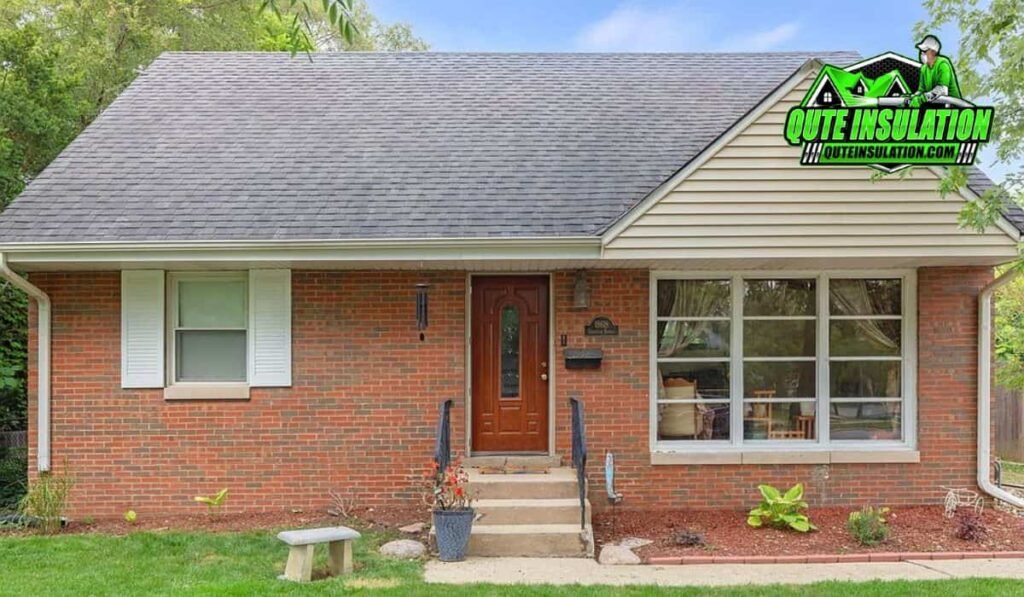
Around 15 minutes (8 miles) west, Homewood’s postwar split-levels and ranches from the 1950s and 1960s carry thin original attics and cold knee walls. Attic top-ups toward R-49 and rim joist sealing deliver the fastest comfort gains in this railroad-era town.
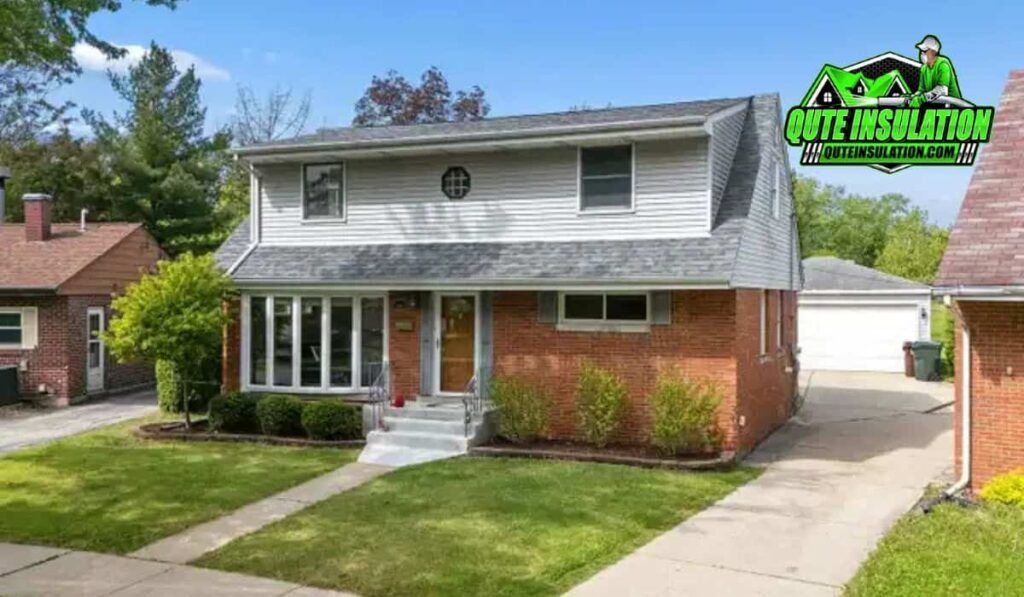
About 20 minutes (11 miles) southwest, Park Forest was planned in 1948 as a GI town, and its co-op townhomes and compact postwar homes share walls, attics, and insulation gaps. End-wall insulation, attic depth, and air sealing transform these homes block by block.
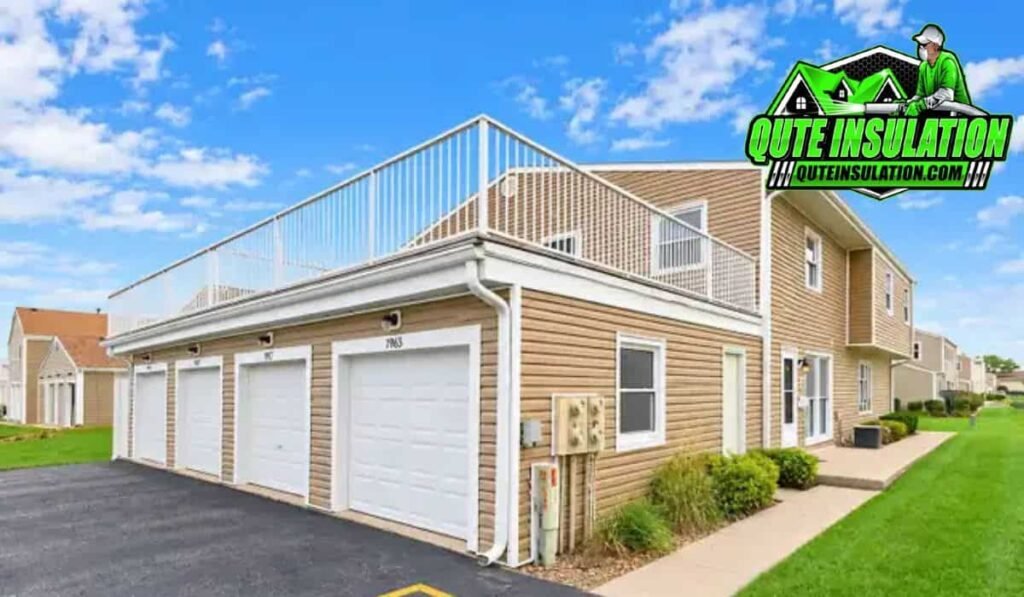
Our western anchor, about 25 minutes (16 miles) out, Tinley Park spans Victorian homes near downtown Oak Park Avenue, boom-era Brementowne, and newer Brookside Glen reaching into Will County. All three eras get the method that fits, from dense-pack walls to attic top-ups.
We also serve neighboring Cook County communities, including South Holland, Thornton, Chicago Heights, Matteson, Country Club Hills, and Orland Park. Cook County ZIP codes we serve include 60411, 60422, 60425, 60409, 60430, 60438, 60466, 60477, and 60487.
Posted on Google
 Terry Browne
Trustindex verifies that the original source of the review is Google.
I Received A Great Quote, & Derrick Is Very Professional,He Explained Everything In Detail, He Gets An A +++ 🙏Posted on Google Rod SpencerExcellent work and very professional. Blew installation into my split-level inside wall. Performed the job from the top level of the inside wall and the bottom. I highly recommend this company. 5 Stars *****Posted on Google
 Billy BurseGreat folks and great workPosted on Google
 Ellie CastilloI processed my request online and Derrick contacted me within minutes to schedule an in person quote he matched price and schedule the same week my work. Very responsible, professional and everything was done within hours they left my house cleaned and very happy with their job !!! 100% recommended!!Posted on Google
 Mark MaysAttic installation was done well and price was reasonable.Posted on Google
 Christine ZylstraAfter removing my attic insulation completely, cleaning and disinfecting, the team of professionals installed the new insulation in record time. They were very professional and thorough. I can feel the difference in one day. They were polite, helpful and cleaned up completely when the job was finished. I highly recommend this company.
Plenty of trucks cross this county every day. Here is why the calls come to a crew based inside it.
More than 15 years of insulation work in south suburban Cook County means our crews have been inside every housing era the region built: prewar bungalows, GI-town co-ops, postwar split-levels, and boom-era subdivisions. We usually know where a home leaks before the camera confirms it.
Every installer who enters a Cook County home is licensed, insured, and trained to Spray Polyurethane Foam Alliance standards, and every project follows Illinois energy code. The documentation is available before work begins.
The FLIR thermal report and a written, itemized quote arrive before any scheduling and before any payment. Both are free, and the findings are yours to keep whichever way you decide.
If your home does not feel clearly more comfortable after the work, we come back, find the cause, and fix it at no charge. That promise is written into every contract we sign across Cook County.
From a bungalow on the state line to a two-story in Tinley Park, warmer rooms and lower bills start with one call. Reach Qute Insulation for a free thermal inspection anywhere in our Cook County service area, a plain-language explanation of what your home needs, and a written quote with no pressure attached.
Our core Cook County service area covers Lynwood, Lansing, Calumet City, Glenwood, Homewood, Flossmoor, Park Forest, and Tinley Park, plus neighboring towns like South Holland, Thornton, Chicago Heights, Matteson, and Orland Park. Because the headquarters sits in Lynwood, inside the county, most south suburban homes are within a 25-minute reach, and inspections book within a day or two.
Plan on $1.50 to $3.50 per installed square foot for an attic anywhere in our Cook County service area, with material, depth, and access setting the exact figure. Most single-family homes finish in one working day. The itemized quote is free and arrives before any commitment, so you can compare it against any other bid with full information.
Nicor Gas and ComEd discount qualifying insulation directly on the invoice and pay up to $500 for air sealing through program-approved contractors. IHWAP adds free weatherization for households at or below 200% of the federal poverty line. Funding is limited each year across the territory, so early applications collect the most before the money runs out.
It can, when the insulation is part of a permitted improvement project. The exemption shields up to $75,000 of added home value from assessment increases for up to four years, applied automatically by the Cook County Assessor after the building permit field check. Confirm your project’s specifics with the Assessor’s Office, and we supply whatever documentation your permit file needs.
The U.S. Department of Energy recommends R-49 to R-60 for attics across Climate Zone 5, which covers all of Cook County, Illinois. Most prewar and postwar homes in the south suburbs measure R-11 to R-19 today, and many older walls hold nothing at all. That gap is why attic top-ups and dense-pack walls change the first winter so noticeably.
Yes. Homes in unincorporated pockets around the south suburbs are fully inside our range, and we handle the permit side correctly, since unincorporated properties follow Cook County’s own building requirements rather than a village code. The free inspection, itemized quote, and rebate paperwork work exactly the same way they do inside village limits.
Yes, and they are some of our favorite work. Dense-pack cellulose enters through small, patched openings, filling the empty walls of Lansing bungalows, Calumet City two-flats, and Flossmoor estates while the brick, plaster, and period trim stay exactly as the builders left them. Careful air sealing around original windows completes the transformation.
Being based inside Cook County keeps response quick: Lansing in about 7 minutes (3 miles), Calumet City in about 12 minutes (6 miles), Homewood and Flossmoor in about 15 minutes (8 miles), and Tinley Park in about 25 minutes (16 miles). Inspections usually book within 24 to 48 hours, and installation follows one to three business days after approval.
The house decides. Blown-in fiberglass or cellulose wins in attics, dense-pack cellulose wins inside the empty walls of prewar homes, closed-cell spray foam wins in damp crawl spaces and rim joists, and air sealing underneath any of them is what makes the material perform to its rating.
No. The 25C federal credit expired on December 31, 2025, so insulation installed in 2026 earns nothing on a federal return. Cook County homeowners should plan around the Nicor Gas and ComEd rebates, IHWAP, and the county’s Home Improvement Exemption instead. Work completed and placed in service during 2025 can still be claimed on the 2025 return using IRS Form 5695.