
Will County runs from horse pastures outside Monee to the limestone courthouse blocks of Joliet, and no two of its homes lose heat the same way. Qute Insulation covers that whole range with attic insulation, spray foam, air sealing, insulation removal, and crawl space encapsulation, delivered by one crew that has worked Chicagoland’s south suburbs for more than 15 years.
Our Lynwood headquarters sits just over the county line, minutes from Crete, which keeps Will County scheduling fast and drive charges nonexistent. Every project opens with a free thermal inspection and a written, itemized quote.
Whether you’re dealing with high energy bills, uneven room temperatures, or unwanted noise, we’re here to help. Reach out today for a free home energy consultation, or get answers from one of our experts with 15+ years of experience in attic, crawlspace, spray foam, air sealing, and whole-home energy efficiency.
Will County, Illinois, holds nearly two centuries of housing. Crete was laid out in 1849 and still keeps its original village blocks, Joliet grew into the county seat with grand historic districts and worker bungalows, and Monee splits between village streets and rural acreage. All of it faces the same Climate Zone 5 winters, and almost none of it was built to today’s insulation standards.
ENERGY STAR reports that sealing air leaks and adding insulation can trim heating and cooling costs by about 15%, and across Will County our thermal inspections keep finding the same five escape routes:
Joliet’s Cathedral Area and East Side Historic District hold Victorian and early-1900s homes on limestone foundations, while post-World-War-I bungalows and Foursquares fill the blocks around them. Nearly all of them hide empty wall cavities behind plaster. Dense-pack insulation fills those walls through small, patched openings, bringing the county seat’s grandest and humblest old homes up to modern comfort without touching a single period detail.
Crete spans from 1849 originals near Main Street to the 1957 to 1959 ranches of Balmoral Heights and the 1987 to 1999 homes of Balmoral Woods by the golf course. Each era carries the thin insulation of its day, so attic top-ups toward R-49 and careful wall work deliver the fastest comfort gains in the village, whatever the build year.
Monee lives two lives, with village streets on natural gas and rural acreage along the township roads heating with propane. Propane costs more per unit of heat than gas, which makes insulation the highest-return investment a rural Monee home can make. Farmhouses, pole barns, and newer homes in subdivisions like Majestic Hills all get the treatment their construction actually calls for.
All 23 of our insulation and energy services are available throughout our Will County service area. Here is how the work groups on real projects, from Joliet’s historic streets to Crete Township’s farm roads.

Will County’s heavy clay soil keeps crawl spaces and limestone-foundation basements damp, and closed-cell spray foam is built for that fight. It seals and insulates in one pass, while open-cell foam quiets larger homes.
Joliet’s Cathedral Area Victorians and Crete’s 1849 village homes hide hollow plaster walls that dense-pack cellulose fills without demolition. Small access points get patched after, leaving every bit of Will County’s historic character untouched.

Wind crosses Will County’s open farmland with nothing to slow it, so unsealed gaps cost more here. We seal every bypass and penetration with foam, caulk, and mastic, then verify the result with a calibrated blower door test.

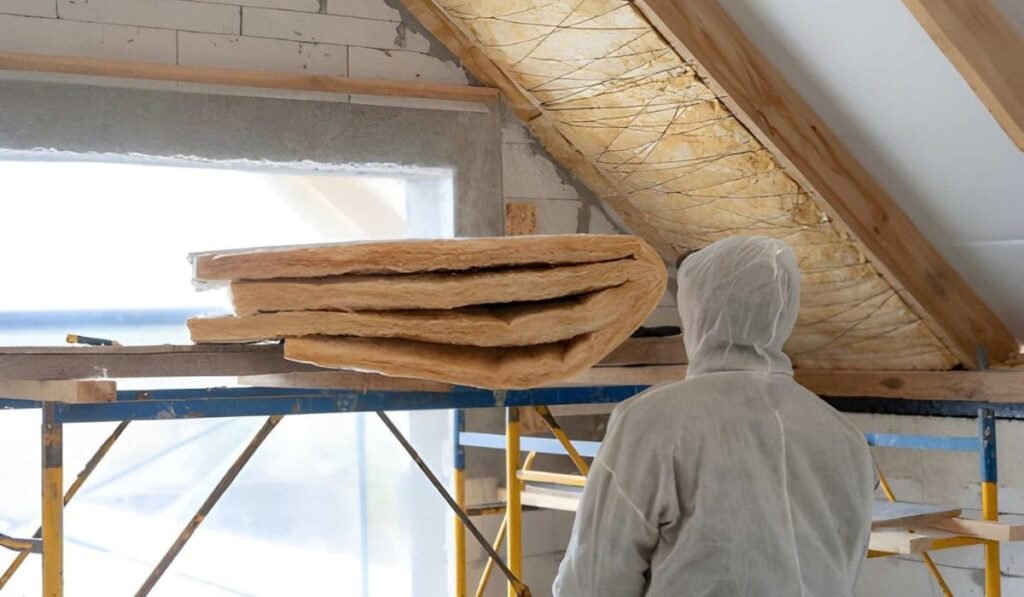
Fire-rated, formaldehyde-free fiberglass handles Will County attics and open walls at the most affordable price point, from Balmoral Heights ranches to Joliet bungalows. Batts or blown-in, most single-family attic jobs wrap up in a single day.

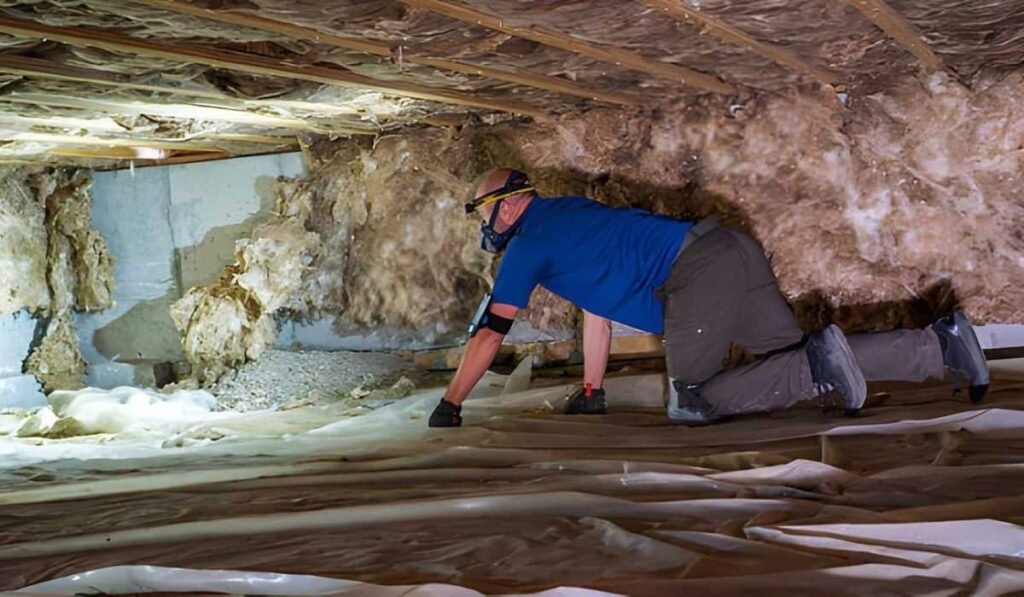
Rural Will County attics collect rodent damage, and older ones collect decades of settled material. HEPA-filtered vacuums pull it all out cleanly; we sanitize the space, seal the entry points, and prep for new insulation.

We handle the Nicor Gas and ComEd rebate applications for Will County homeowners from first form to final invoice discount, and we guide rural propane households to the ComEd and IHWAP paths that still apply to them.

Thorn Creek drainage and wet clay keep Will County crawl spaces musty from Crete to Monee. Full encapsulation seals a heavy vapor barrier over the ground and walls, with rim joist foam finishing the moisture off permanently.

Farmhouses and village homes across Will County carry exposed pipes through unheated spaces, and January finds every one of them. Foam and fiberglass wrap prevents freeze bursts and cuts the heat lost between the water heater and faucet.

Between I-80 traffic, freight trains serving Joliet’s intermodal yards, and busy US-30, Will County homes near the corridors hear it all. Dense acoustic insulation in exterior walls and ceilings turns the volume down noticeably.

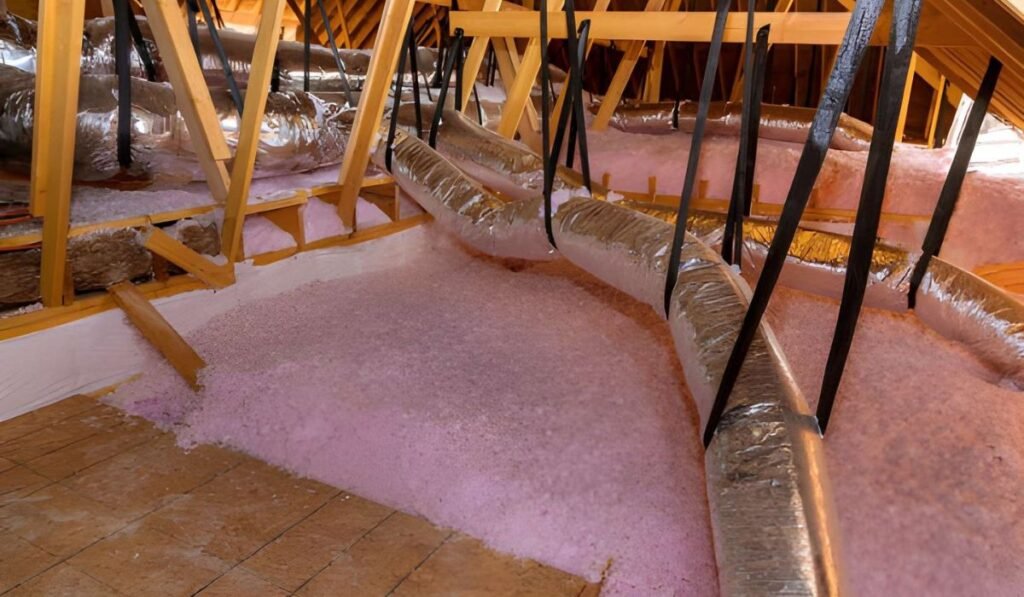
Whether the home is a Joliet Foursquare, a Crete golf course build, or a Monee farmhouse, the attic pays back first. We raise Will County attics to the R-49 to R-60 range for Zone 5 winters.
Insulation in Will County, IL typically runs $1.00 to $4.00 per installed square foot, with the material and the part of the house setting the number. A historic wall job in Joliet’s Cathedral Area and a pole barn outside Monee are different projects, which is why every quote follows a real inspection rather than a phone estimate.
Blown-in attic insulation anchors the affordable end at typically $1.50 to $3.50 per square foot, and it is the first upgrade most Will County homes need. Closed-cell spray foam holds the top of the range at roughly $2.00 to $4.00, earning its price in damp crawl spaces and rim joists. Removing old or contaminated material typically runs $1.00 to $2.00 per square foot.
Most homeowners recover the cost through energy savings within three to seven years, and propane-heated rural homes often recover it faster, because every unit of heat they keep costs more. Every quote we write is free, itemized line by line, and based on your home’s actual measurements.
All of Will County sits in Climate Zone 5, where the U.S. Department of Energy sets the attic target at R-49 to R-60. The county’s historic homes often hold nothing in their walls, its postwar housing typically measures R-11 to R-19 in the attic, and even newer subdivision builds usually stop near R-38. The gap between those readings and the targets below is where Illinois heating budgets disappear.
Area of Home | DOE Recommended R-Value (Zone 5) |
Attic/ceiling | R-49 to R-60 |
Walls (wood frame) | R-13 to R-21 |
Floors | R-25 to R-30 |
Crawl space walls | R-15 to R-19 |
Basement walls | R-15 to R-19 |
Your free inspection measures what the house actually holds right now, attic, walls, and crawl space included. The recommendation that follows fits your specific Will County home and budget, not a generic chart.
Will County homeowners have four savings paths in 2026: Nicor Gas and ComEd Home Energy Savings rebates, free weatherization through the Illinois Home Weatherization Assistance Program for income-qualified households, the state’s Homestead Improvement Exemption on property taxes, and nothing federal, since the 25C tax credit expired on December 31, 2025. Rural propane homes have their own path, covered below.
The joint Home Energy Savings Program discounts qualifying attic and wall insulation directly on your invoice, and air sealing earns up to $500 per household. The installer must be program-approved, and blower door tests plus attic photos are required before and after the work.
Funding is limited each year across the territory, so Will County homeowners who book early in the season collect the most before the money is spoken for.

Rural homes on propane fall outside the Nicor Gas rebate track, but they are not left out. ComEd’s electric-side rebates still apply; income-qualified households can use IHWAP regardless of heating fuel, and the savings case is actually stronger because propane heat costs more per unit than natural gas. Insulation cuts the bill that hurts most.
Illinois law gives every county a property tax shield for home improvements, and Will County administers it through the township assessors under the Supervisor of Assessments. The Homestead Improvement Exemption defers assessment increases on up to $75,000 of added market value for up to four years on an owner-occupied home.
Insulation installed as part of a larger permitted improvement can fall under that protection, so a renovation that includes insulation work may raise your comfort without raising your assessment. Confirm your project’s specifics with your township assessor, and we supply the documentation your file needs.
The federal 25C Energy Efficient Home Improvement Credit expired on December 31, 2025, ended early by the One Big Beautiful Bill Act, and IRS Fact Sheet 2025-05 confirms insulation installed in 2026 earns no federal credit. The utility, state, and property tax programs above are the real savings path this year.
One exception survives: Will County projects completed and placed in service by December 31, 2025 can still be claimed on the 2025 tax return using IRS Form 5695.
Our Will County service area reaches from the county’s northeast corner, minutes from our Lynwood base, out to the county seat itself. As a trusted local insulation contractor serving Will County communities from Crete to Joliet, Qute Insulation proudly extends its services across the entire Chicagoland area.
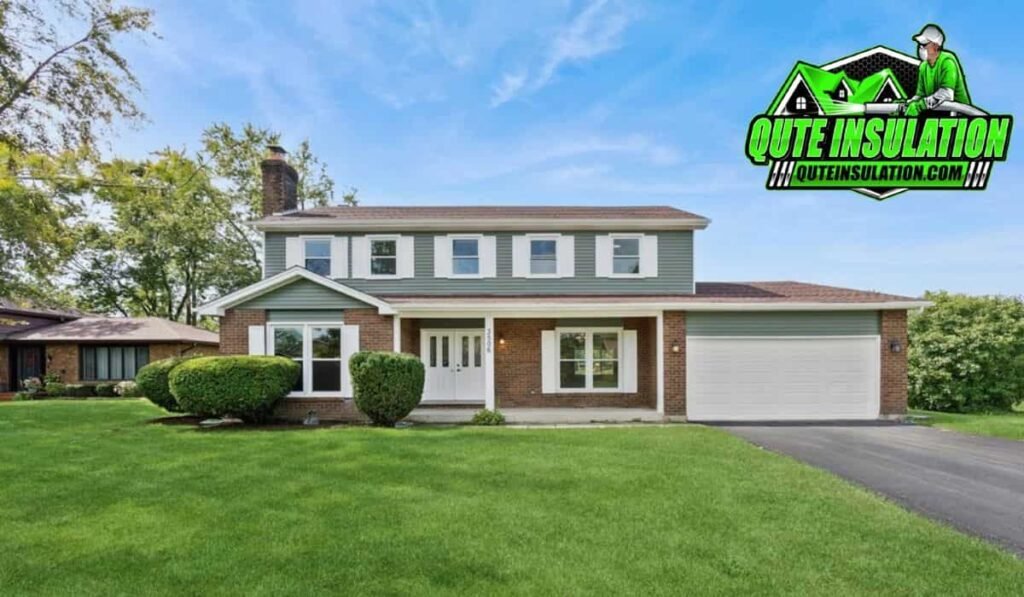
Crete sits closest, about 15 minutes (9 miles) southwest of our headquarters via IL-394 and Exchange Street. Its 1849 village blocks near Main Street, the Balmoral Heights and Balmoral Woods subdivisions, and the horse acreage of rural Crete Township along Dixie Highway are all regular stops for our crews, with damp clay-soil crawl spaces leading the call sheet.
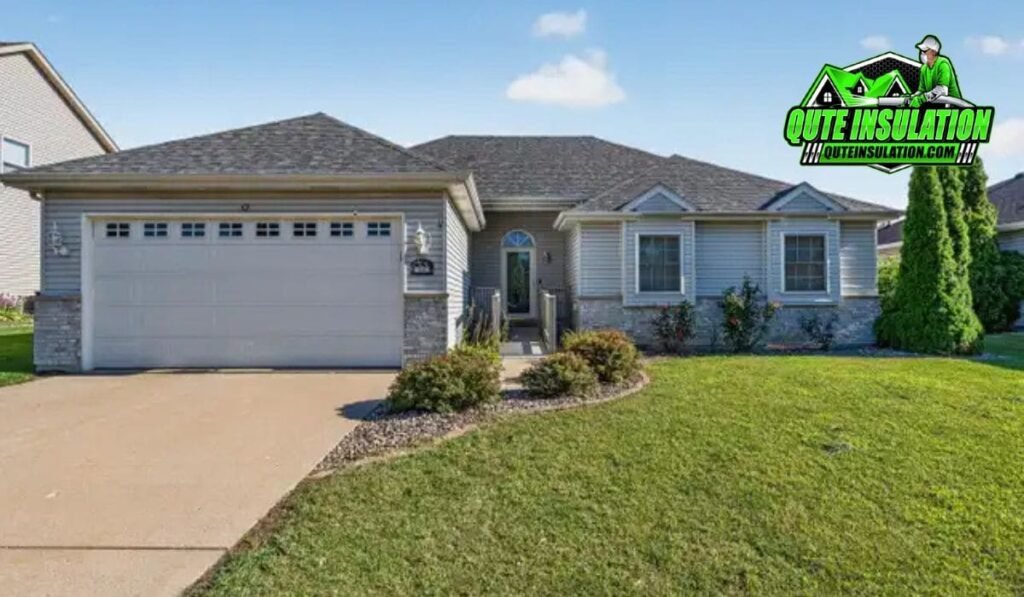
The county seat anchors our western range at about 45 minutes (28 miles) via US-30 or I-80, and its housing variety rewards the drive. The Cathedral Area and East Side Historic District, the post-World-War-I bungalow blocks, and the newer West Side subdivisions like Lakewood Prairie each get the method their era demands, from dense-pack plaster walls to builder-grade attic top-ups.
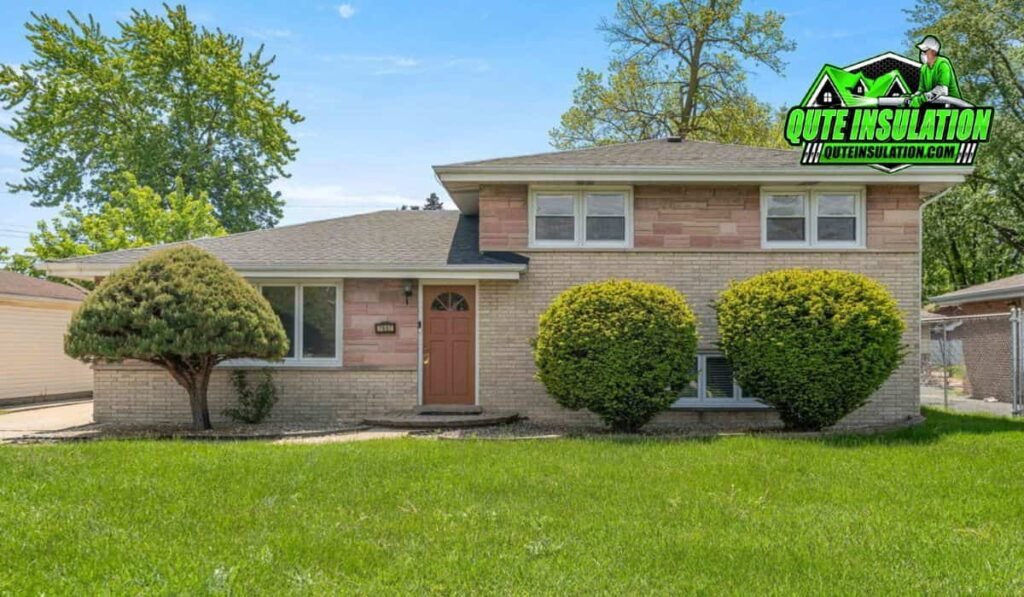
Monee is about 22 minutes (14 miles) southwest, and it brings the county’s clearest split: village homes on Nicor Gas and rural acreage heating with propane. Farmhouses, pole barns, Majestic Hills homes, and everything along the township roads get insulation matched to how each property is actually built and heated.
We also cover the Will County portions of Tinley Park and Park Forest, along with nearby communities including Steger, University Park, Beecher, Frankfort, Mokena, and New Lenox. Will County ZIP codes we serve include 60417, 60449, 60431, 60432, 60433, 60435, and 60436.
Posted on Google
 Terry Browne
Trustindex verifies that the original source of the review is Google.
I Received A Great Quote, & Derrick Is Very Professional,He Explained Everything In Detail, He Gets An A +++ 🙏Posted on Google Rod SpencerExcellent work and very professional. Blew installation into my split-level inside wall. Performed the job from the top level of the inside wall and the bottom. I highly recommend this company. 5 Stars *****Posted on Google
 Billy BurseGreat folks and great workPosted on Google
 Ellie CastilloI processed my request online and Derrick contacted me within minutes to schedule an in person quote he matched price and schedule the same week my work. Very responsible, professional and everything was done within hours they left my house cleaned and very happy with their job !!! 100% recommended!!Posted on Google
 Mark MaysAttic installation was done well and price was reasonable.Posted on Google
 Christine ZylstraAfter removing my attic insulation completely, cleaning and disinfecting, the team of professionals installed the new insulation in record time. They were very professional and thorough. I can feel the difference in one day. They were polite, helpful and cleaned up completely when the job was finished. I highly recommend this company.
A county this size sees plenty of contractor trucks. Here is why the calls come to ours.
More than 15 years across Chicagoland's south suburbs means our crews know Will County's full housing range: limestone-foundation Victorians in Joliet, 1950s ranches in Crete, and propane farmhouses outside Monee. Each building gets the method that fits it, not a one-size package.
Every installer who enters a Will County home is licensed, insured, and trained to Spray Polyurethane Foam Alliance standards, and every project follows Illinois energy code. The paperwork is available before work begins.
The FLIR thermal report and a written, itemized quote arrive before any scheduling and any payment. Both cost nothing, and the findings are yours to keep whichever way you decide.
If your home does not feel clearly more comfortable after the work, we return, find the cause, and fix it at no charge. That promise is written into every Will County contract we sign.
From an 1849 village original in Crete to a propane farmhouse outside Monee to a Cathedral Area Victorian in Joliet, warmer rooms and lower bills start with one call. Reach Qute Insulation for a free thermal inspection, a plain-language explanation of what your home needs, and a written quote with no pressure attached.
Our core Will County service area covers Crete, Monee, and Joliet, plus the Will County portions of Tinley Park and Park Forest and nearby towns like Steger, University Park, Beecher, Frankfort, Mokena, and New Lenox. Crete sits about 15 minutes (9 miles) from our Lynwood base, so the county’s northeast corner books fastest, and Joliet anchors the western edge of the range.
Plan on $1.50 to $3.50 per installed square foot for an attic anywhere in our Will County range, with material, target depth, and access setting the exact figure. Most single-family homes finish in one working day, farmhouses included. The itemized quote is free and arrives before any commitment, so you can compare it against any other bid with full information.
Nicor Gas and ComEd discount qualifying insulation directly on the invoice and pay up to $500 for air sealing through program-approved contractors, while IHWAP delivers free weatherization for households at or below 200% of the federal poverty line. Annual funding is limited across the territory, so early Will County applications collect the most before the money runs out.
It can, when the insulation rides inside a larger permitted improvement. Illinois’ Homestead Improvement Exemption defers assessment increases on up to $75,000 of added market value for up to four years on owner-occupied homes, administered in Will County through your township assessor. Confirm your project’s eligibility with that office, and we provide whatever documentation the file needs.
Yes, just through a different door. Propane homes sit outside the Nicor Gas track, but ComEd’s electric-side rebates still apply, and IHWAP serves income-qualified households regardless of heating fuel. More importantly, insulation pays back faster on propane than on gas, because every unit of heat you stop losing is a more expensive unit saved.
Yes, Joliet is the established western anchor of our Will County range, about 45 minutes (28 miles) via US-30 or I-80. We batch Joliet inspections and installations efficiently; the free inspection and written quote work exactly as they do everywhere else, and no travel charge ever appears on a Joliet invoice.
Yes, carefully and often. Dense-pack cellulose enters through small, patched openings, filling the empty plaster walls of Victorian and early-1900s homes while the woodwork, trim, and period character stay exactly as they are. Paired with air sealing around original windows, these grand old Will County homes become dramatically warmer without losing what makes them special.
The U.S. Department of Energy recommends R-49 to R-60 for attics across Climate Zone 5, which covers all of Will County, Illinois. Most homes here measure R-11 to R-19 today, and the oldest walls hold nothing at all. That gap is why attic top-ups and dense-pack walls change the first winter so noticeably.
Free inspections usually book within 24 to 48 hours for Crete and Monee, and within a few days for Joliet as routes batch up. Installation follows one to three business days after you approve the written quote. January and February fill the calendar fastest, so booking about a week ahead is smart in deep winter.
No. The 25C federal credit expired on December 31, 2025, so insulation installed in 2026 earns nothing on a federal return. Will County homeowners should plan around the Nicor Gas and ComEd rebates, IHWAP, and the Homestead Improvement Exemption instead. Work completed and placed in service during 2025 can still be claimed on the 2025 return using IRS Form 5695.